Welcome to Celebrate Pagan Holidays where I talk about deities from various pantheons, polytheism, magic, and topics that relate to us as modern pagans and witches.
Introduction To Paganism
What is Paganism?
Paganism is a religion that is not part of the “major” world religions, namely Christianity, Islam, and Judaism (Abrahamic Religions). Hinduism is interesting as it is the world’s third-largest religion albeit very different from the Abrahamic religions which share a common beginning. Hindus worship many gods but view them all as various forms of the one and same God. So we don’t consider it “pagan” for our purposes.
Historically, paganism was a religion that was practiced during the pre-Christian era and by non-Christian indigenous people. Paganism is an umbrella term that shares similar traits such as a deep reverence for nature and its cycles, emphasis on personal spiritual experience, ancestor veneration, and taking personal responsibility for actions rather than having a strict dogma. They often incorporate earth-centered rituals and magic.
Most pagan cultures recognized many gods (polytheism) focusing on masculine (Gods) and feminine (Goddesses) .A few “pagan” religions were more monotheistic. One example is Zoroastrianism, an ancient Persian religion.
Pagans draw from several different traditional religions and cultures which may include: Celtic, Druid, Egyptian, Greek and Roman, Rodnovery, Native American, Norse, Yoruba, and Wiccan. Each one of these has several subsets! So our goal is to be kind, to coexist, and be accepting of our fellow pagans.
This article will introduce you to a number of pagan groups as well as answer 5 common questions you have asked us. Links will help you find more information and you can also check out our 2026 Pagan Celebration Calendar.
Who Are Pagans?
You may hear the terms contemporary or neo-paganism to describe today’s modern paganism. Because there is no “dogma” in paganism we are a delightfully diverse group. We come together with a shared passion to explore our spirituality.
Today Paganism has become a modern religion that emphasizes and incorporates beliefs such as nature worship and believes that animals, plants, and matter such as rocks have a spiritual essence. Pagans have a broad range of doctrines (pantheistic). You may feel aligned with one particular path or enjoy incorporating many.
Three General Characteristics of Pagans:
1) Religious and spiritual practices revolve around the earth, the natural world, and/or the manifest physical universe
2) Spiritual beings: goddesses, gods, and ancestral spirits as well as natural spirits such as animals. Many recognize fairies, elves, dwarves, sprites, and gnomes who are collective called the Fae. Read my blog Working With The Fae to learn more.
3) Pagans follow an agricultural, seasonal, or lunar calendar that follows natural earth cycles (versus the contemporary Gregorian Calendar). In addition, they follow the life cycle of birth, growth, death.
Why Be A Pagan?
You were raised a pagan
No dogma or authority figure
Connect with nature and the environment
Individual responsibility vs, sin and shame
God AND Goddess - the female deity
Explanations of super-natural experiences
Power of magic
Religious choice - Eclectic practices welcomed
Inclusive - paganism is open to all races, ethnicities, and sexual orientations
Check out my blog 7 Benefits of Being A Pagan
Types of Pagans
Celtic/Druidry
We do “lump” these two together although there are several subtle differences that practitioners make. Traditionally from the lands of Ireland, Scotland, Wales, Brittany, and neighboring regions from 500 BCE and 500 CE and their traditions were kept alive particularly in Ireland and Great Britain. The revival movement has its roots in the 1600s, although Druidry as we know it only picked up a large following in the 1960s.
Druidry is a revival and reconstruction of the ancient Celtic religion, and its practitioners are called Druids. Originally, Druids were the priest class of Celtic society, but now the term often refers to any Celtic neopagan.
Most modern Druids affirm reincarnation and believe that soul goes through a continual cycle of births, lives, and deaths. They believe in a spirit world as well, and that it can cross over with our own world.
Not only that, but Druidry is also very open to other Indo-European faiths and welcomes their believers to practice as Druids too. Druid societies are committing to researching and reconstructing these religions and sustaining them as well.
Modern Celtic and Druid pagans often honor deities such as Artio, Brigid, Lugh, the Morrígan, and Cernunnos. These gods and goddesses are closely tied to natural forces like fire, craftsmanship, sovereignty, war, and fertility. Druids commonly practice rituals and prefer to celebrate them in the natural world, often in the ruins of Celtic history.
Keep in mind, however, that Druidry and Wicca are not the same. While there is some overlap and some pagans identify as both, they're overall two separate traditions. More about Wicca below.
One of the aspects of the Celtic faith that we love to follow is the Celtic Tree Months. Much of ancient Celtic religion was transmitted orally, so modern Celtic paganism is a reconstruction that blends archaeological evidence, folklore, and mythology. Even so, it has become one of today’s most popular pagan paths because of its deep connection to ancestral traditions, storytelling, and the living landscape. Many who follow a Celtic path feel drawn to nature spirits, ancestral reverence, and the belief that the boundary between the seen and unseen worlds is thin.
I personally love the 13 Celtic Tree Months and will change my altar and celebrate each month. The Celtic Tree Months are based on the Ogham alphabet and each month corresponds to a sacred tree. The trees are associated with deities, elements, healing, and certain areas of magic.
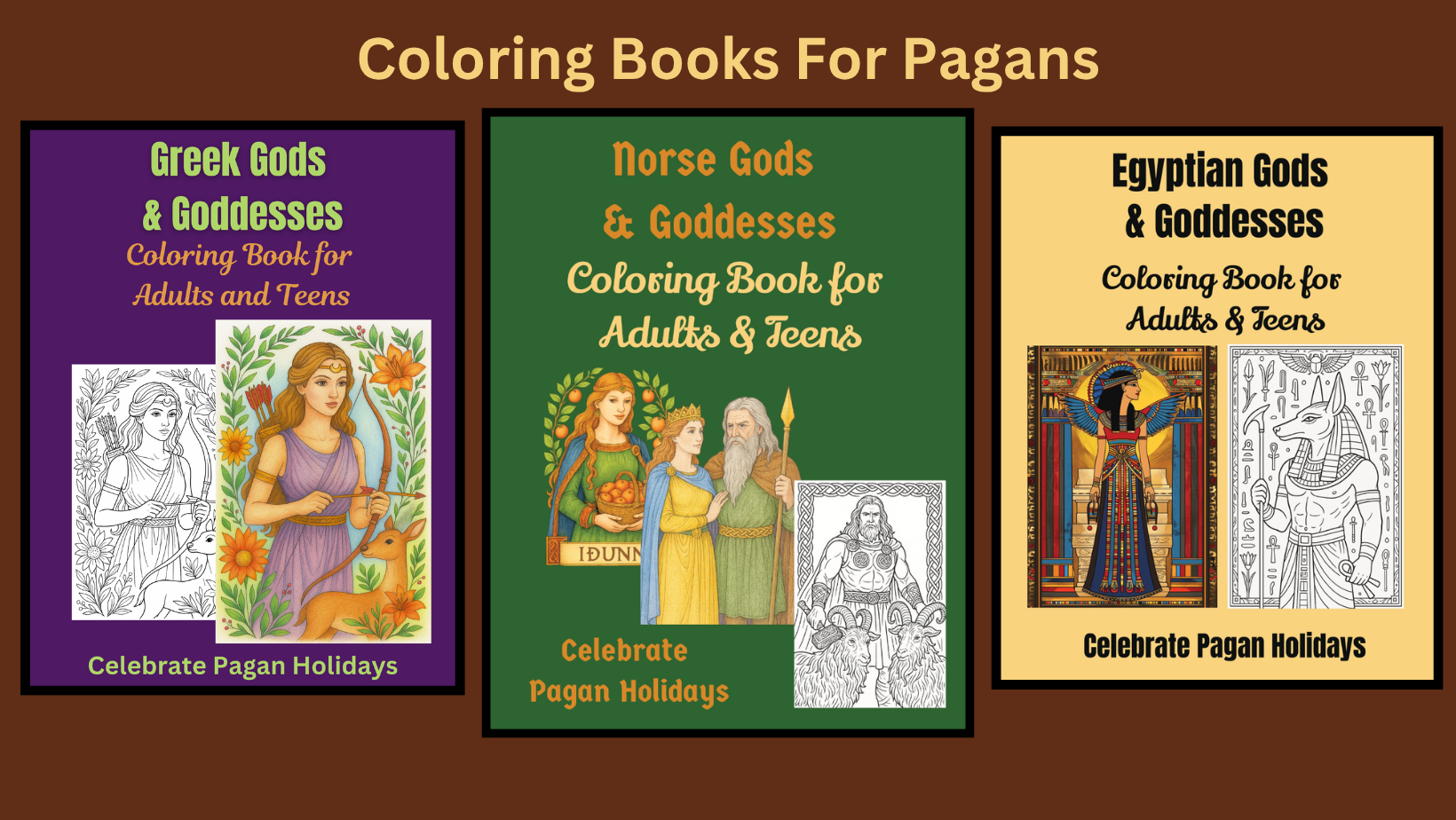
Check out our coloring books. Great for relaxation and exploration. Available on Amazon in paperback and in a PDF download on our resource page.
Hellenism
Greek and Roman
Greek and Roman paganism, often called Hellenic and Roman Reconstructionism, honors the deities of the classical world. Although the Greeks and Romans had different Gods and Goddesses they often corresponded with each other and had similar traits and stories. These traditions are rich in history and both reflect the powerful empires associated with Ancient Rome (Italy) and Athens (Greece).
Greek pagans may build relationships with gods such as Athena, Apollo, Artemis, and Hades, while Roman practitioners honor their counterparts Minerva, Apollo, Diana, and Pluto.
Because it’s so diverse, Hellenism lacks a central tradition of worship. However, you can expect most Hellenic ceremonies to include purification rituals, prayers, hymns, and feasting. Hellenism is one of the older forms of neopaganism. Its roots date back to the Roman Empire when Julian attempted to revive his ancestral faith in the face of Christianity's increasing influence. Since then, Hellenism has repeatedly been revived and practiced.
As pagans, we can be thankful that much of ancient Greece and Rome is so well preserved, especially its philosophy. Like Ancient Egypt there is a rich written history and works of art. Many temples and religious sites are still standing, although some are ruins.
Modern Hellenic and Roman pagans often incorporate mythology, philosophy, and ancient literature into their spiritual practice. Some focus on household worship—daily offerings to family and guardian spirits—while others follow traditional festival calendars rooted in ancient civic celebrations. These paths appeal to people who appreciate structure, classical history, and the intellectual depth of ancient Mediterranean cultures.
Kemetism
Ancient Egypt
The reconstruction of ancient Egyptian religious traditions, is called Kemetism or Kemeticism. Modern Kemetics honor deities such as Isis, Osiris, Hathor, Ra, Horus, Anubis, and Sekhmet—gods associated with cosmic balance, protection, fertility, and the cycles of life and death. Central to Egyptian belief is Ma’at, the principle of harmony, truth, and right living. Many modern practitioners see Ma’at as a guide for ethical behavior and personal balance.
Kemetics follow principles derived from ancient Egyptian spirituality and philosophy, often derived from historical writings and archeology. The ancient Egyptian left behind numerous writing and artwork so we know a lot of their practice. My favorite resource is the Egyptian Book of the Dead originally written as a spell book to help the dead get to the afterlife.
Is Bastet calling you? Do you want to communicate with this ancient Egyptian deity? Many Pagans honor her in their practice. We often think of her as the “cat goddess”. Learn more about her and see my altar to Bastet. This is my most popular video!
Kemetism doesn't always strive to be perfectly accurate to ancient Egypt, which itself was a living culture that lasted and adapted for centuries. Rather, Kemetics strive to revive a religion that works for them. It might work for you too.
Native American
Native American spirituality is very diverse as are the tribal communities. Native American paganism is still very much a living religion. There are tribes today practicing their ancestral Native American religions, with few breaks in that tradition. Even through government persecutions and discrimination.
Native American spiritual practices are deeply tied to specific tribes and nations, each with its own rituals, stories, and cosmology. Many Native American beliefs center on the interconnectedness of all life, the importance of balance, and reverence for animals, ancestors, and the land.
While non-Native people should not adopt ceremonies that are culturally sacred, they can learn from the broader values these traditions share—gratitude, reciprocity, and stewardship of the earth. Many modern pagans find inspiration in the way Indigenous cultures honor the natural world. Many tribes around the USA have public ceremonies. Just check there websites to find out more.
Many people of Native American descent combine elements of their ancestral religion(s) in their practice. I have Cree ancestry however one goddess I love is Hanwi: Sioux Moon Goddess
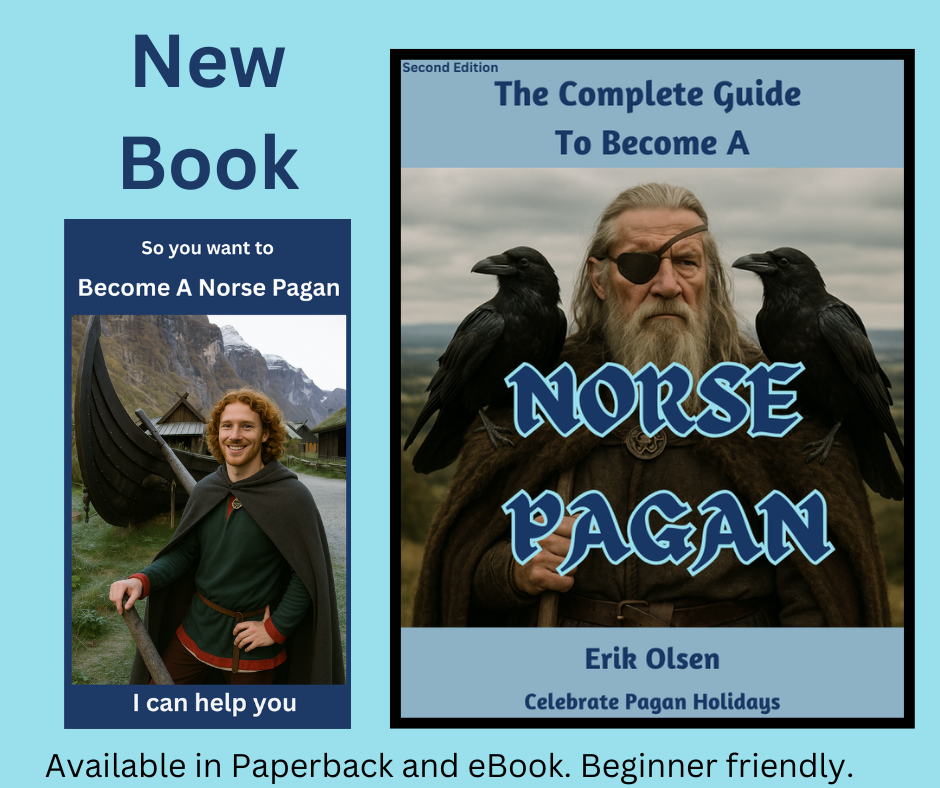
Norse
AsatrU, Germanic Neopaganism, Heathen, Vanatru
The Norse religion was historically based in Northern Europe in Scandinavia, Germany, and the Netherlands. We often refer to it as the Viking era however it is much deeper than that.
Practitioners honor deities such as Odin, Thor, Freyja, Frigg, and Loki, along with land spirits, ancestors, and elemental beings. Norse paganism emphasizes courage, hospitality, personal honor, and community bonds—values reflected in the ancient sagas and myths.
Contemporary Norse paganism continues to grow and several countries have added Norse pagan check boxes on their census reports.
Rituals often include offerings, blóts, and seasonal celebrations. Many Heathens feel a strong connection to the natural world, seeing mountains, storms, and wildlife as expressions of divine presence. The path also encourages self-reliance and responsibility for one’s actions.
What pagan path are you on or want to learn more about? An introduction to the basics and deities of Celtic, Greek/Roman, Egyptian, Native American, Norse, Slavic, Wicca, Yoruba, and Eclectic.
Rodnovery (Slavic Paganism)
Also known as the Slavic Native Faith or Slavic Neo-paganism. This faith originates in Central and Eastern European countries and their descendants. Countries such as Poland, Russia, Syrbia, and Ukraine have the highest populations but Rodnovery is growing in the United States, Canada, the UK, and Australia.
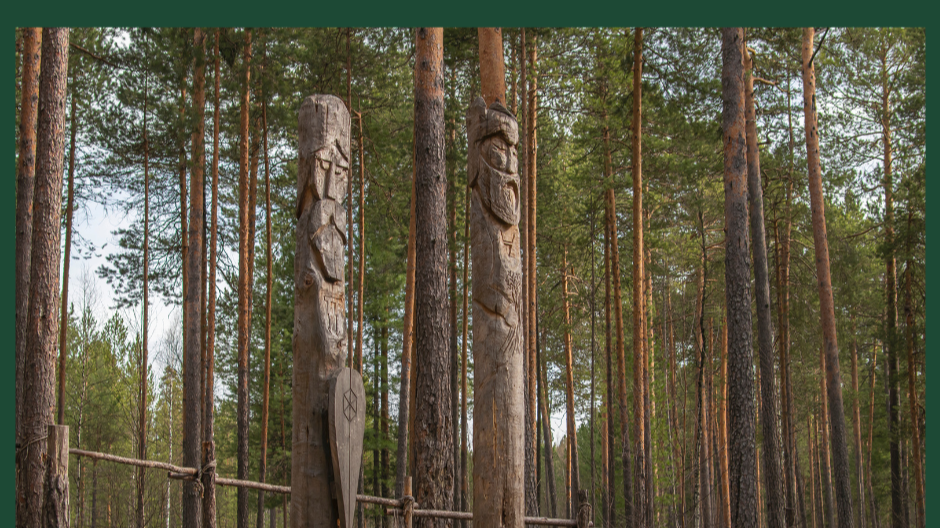
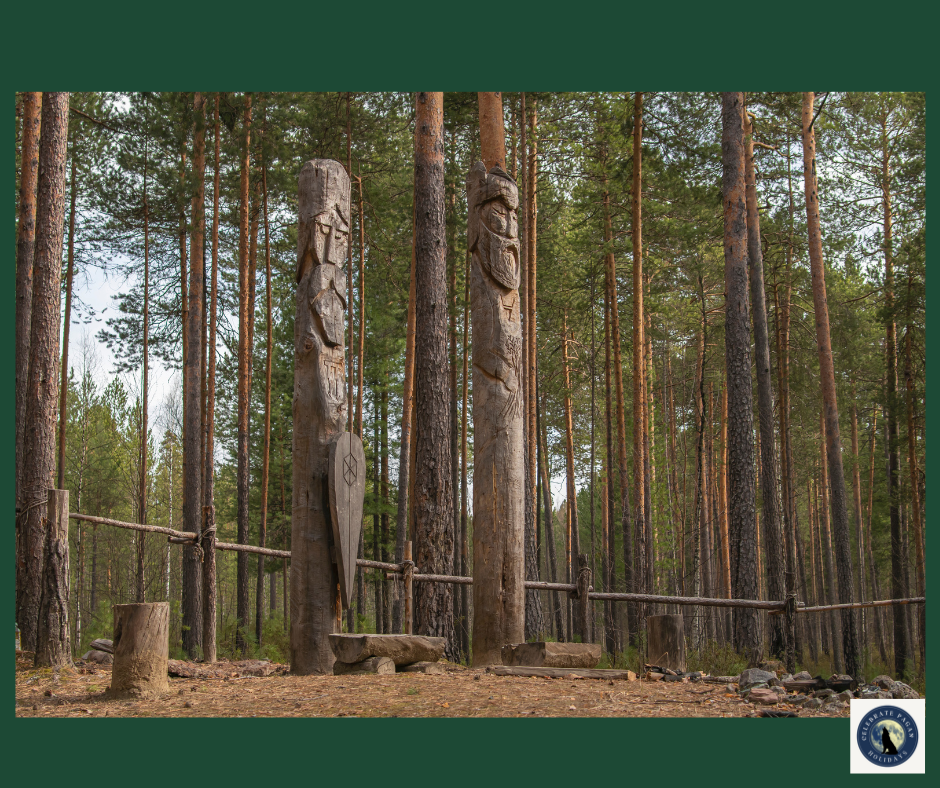
Like most pagan faiths Rodnovery practitioners worship many gods and are nature-oriented. Practitioners honor deities such as Perun, Veles, Mokosh, and Dazhbog—gods connected to thunder, the land, fertility, and the sun. This path places great value on ancestral relationships and the spirits of place, including forests, rivers, and mountains.
Modern Rodnovery often emphasizes living in harmony with nature and maintaining community ties. Because Slavic paganism was heavily suppressed over the centuries, much of today’s practice is a reconstruction built from folklore, songs, and archaeological evidence. Even so, it has grown significantly, with many followers seeking a return to pre-Christian cultural roots and a deeper bond with the land.
Wicca
Wicca is one of the most well-known modern pagan religions and does not have origins in a particular country. It was formally established in 1954 by British Teacher, Gerald Gardener. It centers on the worship of a Goddess and a God, often represented through seasonal cycles of growth, harvest, and renewal. Wiccans celebrate eight major holidays, known as Sabbats, which align with solstices, equinoxes, and cross-quarter days.
A core belief in Wicca is the Wiccan Rede: “An it harm none, do what ye will.” This ethical guideline encourages practitioners to think carefully about their actions and magic. Wicca appeals to many beginners because it is accessible, adaptable, and emphasizes personal empowerment, creativity, and balance. While some groups follow established traditions like Gardnerian or Alexandrian Wicca, many practitioners are eclectic and tailor their practice to their needs and values.
Rituals often involve casting circles, working with the elements, and practicing magic as a natural extension of one’s connection to the earth. Wicca began as a combination of folk and ceremonial magic with various pagan deities and practices. Since then, it has proved incredibly popular, and it is one of the fastest-growing religions in the United States.
Wiccans often identify as witches and part of their practice is based on spell work and divination. Both take lots of practice! Just like with pagans there are many types of witches. Read my blog 20 Types of Witches: Which One Are You?
Spells and magic are an important part of the Wiccan path. Learn all about how to use pine cones in magic in my video.
Yoruba
Yoruba paganism originates from the Yoruba people of West Africa, primarily in what is now Nigeria and Benin. It is one of the richest and most influential Indigenous religions in the world, known for its deep connection to community, ancestors, and the natural forces that shape daily life. Central to the Yoruba worldview is the belief in Olódùmarè, the supreme creator, and the Orishas, divine beings who guide, protect, and teach humans. Each Orisha is associated with natural elements—such as rivers, storms, metal, fire, or the earth—and has a distinct personality, set of teachings, colors, and offerings.
Read Yemaya: Yoruba Orisha and Mother of All
Devotees build relationships with these divine forces through prayer, song, dance, divination, and acts of devotion that honor both the visible and invisible worlds. Ancestral reverence is equally important; ancestors are seen as wise and protective, helping guide the living toward good character and balance.
The Yoruba religion has also had a profound global impact. Through the African diaspora, Yoruba beliefs blended with local cultures in the Americas and the Caribbean, giving rise to well-known traditions such as Santería in Cuba, Candomblé in Brazil, and Vodou in Haiti. These religions maintain core Yoruba values—respect for nature, harmony within community, and developing ìwà pẹ̀lẹ́, or “good character.”
Rituals often include drumming, dancing, and divination with systems such as Ifá, which help seekers understand their life path and receive guidance.
Eclectic Pagans
However, if none of these pagan traditions seem a perfect fit for you, you aren't alone. That's where Eclectic Paganism comes in.
Eclectic Paganism draws from various traditions, practices, and identities to create a system of worship that works for you, the individual. It is a personal religion, and so no two Eclectic Pagans are the same. And that's the point. You combine aspects of many pagan religions to meet your desired spiritual goals.
For instance, I often have various deities or symbols on my altar. There are times I want to seek strength from powerful (read kickass) female deities. So my altar may have Sekhmet, The Morrigan, and Spider-Woman (Native American not Marvel!) at the same time to honor and pray to.
As such, this is a unique path. However, it’s no less viable than any more cohesive tradition and you're not "less" of a pagan for following it. Nobody is.
Eclectic Paganism has helped thousands connect spiritually and lead fulfilling creative lives. You're exposed to various beliefs and opportunities, which often make up for the experiences you might have in a concrete path or in a specific coven.
Paganism today is a vibrant and evolving spiritual landscape. Whether someone is drawn to Celtic deities, Norse runes, Kemetic rituals, Slavic folklore, or the poetry of Wicca, each path offers a meaningful way to engage with the sacredness of the natural world. What makes paganism so inviting is its flexibility: you do not need to know everything to begin. Most people start by exploring myths, connecting with seasonal rhythms, and listening for what resonates in their own heart and environment.
Common Questions
What is the largest pagan religion?
Wicca is considered the largest modern pagan religion according to several census reports. It is the most studied and influential form of modern paganism and includes various traditions and independent practitioners.
Norse is the second largest and there is an increase of people self reporting as Norse pagans.
I have more information and research in my blog Paganism Is On the Rise! Latest Statistics and Studies
What is Reconstructionism?
Reconstructionism, in a pagan or polytheist context, is an approach to spirituality that seeks to rebuild and practice an ancient religion as accurately as possible using historical, archaeological, and literary sources. Reconstructionists look to the cultures of the past—such as the Norse, Greek, Mayan, Slavic, Celtic, or Egyptian civilizations—and try to understand how their ancestors worshiped, what values they held, and how their rituals were performed.
The goal is not to copy the past perfectly, which is impossible, but to root modern practice in well-researched traditions rather than personal interpretation. Reconstructionists often spend time reading historical texts, studying language, examining material culture, and engaging with academic research so that their spiritual lives honor the worldview of the original cultures.
For many people, reconstructionism offers a strong sense of identity, structure, and connection to ancestral ways of life. It provides a pathway for reviving ancient spiritual traditions in a way that feels grounded, meaningful, and historically informed while still allowing space for personal growth within that cultural framework.
Are there monotheistic pagan religions?
Yes—there are traditions within the broader pagan umbrella that lean toward monotheism even though paganism is typically associated with polytheism. In these cases, practitioners may believe in a single, ultimate divine source while still honoring many gods as expressions or facets of that one great power. This worldview is ancient and surprisingly widespread, showing that monotheism and polytheism are not always mutually exclusive.
For example, in Hinduism—which is not usually classified as pagan today but has influenced many modern pagans—many practitioners believe in one ultimate reality (Brahman) that manifests through many deities. Even within certain African traditional religions, such as the Yoruba tradition, there is one high creator (Olódùmarè) served by a pantheon of Orishas. These systems maintain polytheistic practices while recognizing a singular divine source at the top.
In the modern pagan world, some Wiccans and eclectic pagans also embrace a monotheistic or duotheistic perspective, seeing all deities as emanations of one Goddess, one God, or a single universal energy. Others follow a more philosophical monism, believing that everything—gods, humans, and nature—arises from one interconnected spiritual reality.
So while most pagan religions are polytheistic by nature, there is definitely room within paganism for monotheistic or “one-source” belief systems. Pagan spirituality tends to be flexible, and many practitioners shape their theology according to how they experience the divine in their own lives.
What is the difference between polytheistic or pantheistic?
Polytheism is the belief in many gods. Each deity is seen as a distinct being with their own personality, stories, strengths, and areas of influence. A polytheistic worldview treats these gods as individuals, who can be approached, honored, and build relationships with. Ancient religions such as Greek, Roman, Norse, Celtic, and Egyptian were all traditionally polytheistic. Polytheism emphasizes diversity within the divine, recognizing a spiritual ecosystem rather than a single ruling presence.
Pantheism, on the other hand, is the belief that the divine is identical with nature and the universe itself. Instead of seeing gods as separate beings, pantheism holds that everything—trees, stars, oceans, animals, and even the space between things—is part of one unified sacred whole. In pantheistic belief, the universe is not created by a deity; the universe is the deity. Many people who identify as nature pagans or spiritual naturalists resonate with this view because it highlights the interconnectedness and inherent sacredness of the natural world.
In simple terms: polytheism honors many individual gods, while pantheism sees the divine as the totality of existence. Both perspectives show up in modern paganism, and some practitioners blend them—believing in many gods while also feeling that all life is interconnected through a sacred, universal energy.
Is paganism a religion or a philosophy?
Paganism can be both a religion and a philosophy—how it functions depends on the individual path and the person practicing it. For many people, paganism is a religion because it involves honoring deities, celebrating sacred festivals, practicing rituals, and building relationships with the natural world and the unseen. Traditions such as Wicca, Norse Paganism (Heathenry), Druidry, and Kemeticism have clear structures, shared beliefs, and community practices that fit the definition of a religion. These paths often include worship, ethical guidelines, mythologies, and ceremonies that mark life transitions and seasonal changes.
At the same time, paganism can also function as a philosophy for those who do not work with specific gods or formal rituals. Some modern pagans approach it as a worldview centered on ecological awareness, the interconnectedness of life, and a respect for natural cycles. This philosophical approach focuses less on worship and more on values—such as living in harmony with the earth, honoring ancestors, and cultivating personal responsibility.
Respectfulness
As with everything in paganism, be respectful. Approach paganism with sensitivity and humility. It's a beautiful form of religion but remains open to different cultures however, make sure you don’t practice cultural appropriation.
Cultural appropriation occurs when you stereotype a culture or seek monetary gain from that culture. One popular example is sports teams named “Indians” or “Vikings” or witch costumes that are green-faced and warty.
Many wonderful things happen when we blend cultures and grow spiritually. Our goal is cultural appreciation and this has a powerful energy.
As pagans, we want to try new foods at feasts, learn new dances and music, and perform rituals from different types of pagans. This helps us to grow spiritually as well as relate to persons throughout the world.
The key is acknowledging and being thankful to whom those traditions come from.
Take Away
Regardless of our differences, paganism is and will always be - a family.
Check out our 2026 Pagan Celebration Calendar with links to holidays you can celebrate.


Paganism is a dynamic growing religion but what are the benefits? Becoming a pagan offers its practitioners many benefits.
In this article, we will examine seven benefits that pagans have when compared to other religions. Keep in mind that pagan practices are very diverse and these are general things pagans have in common.