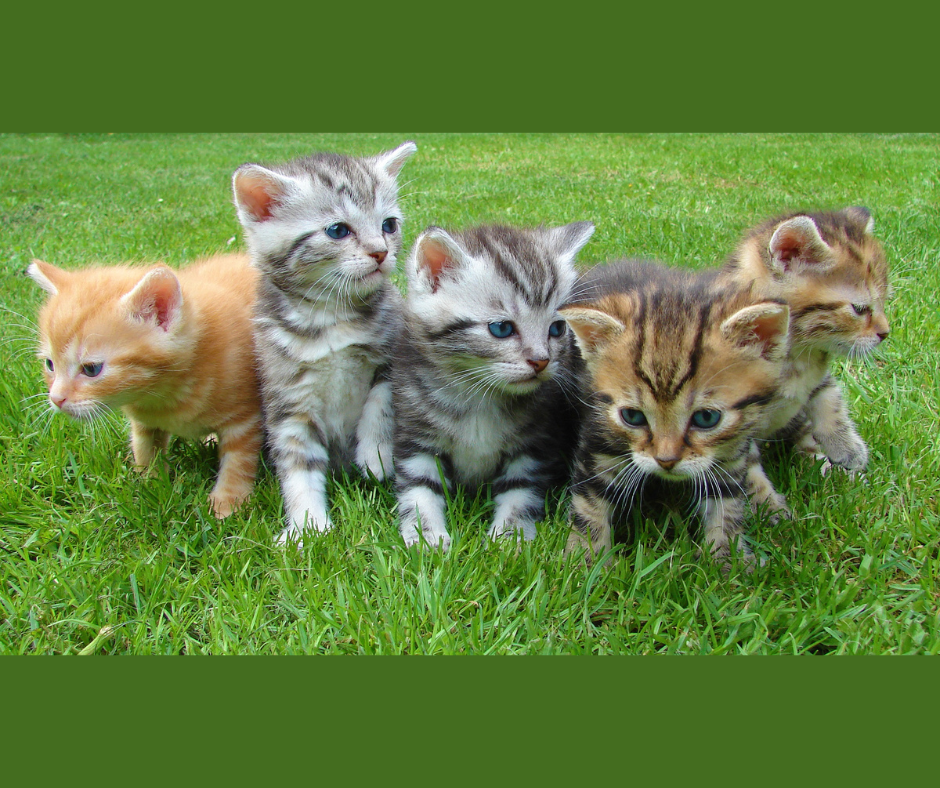
There's something psychologically honest about a deity who has cats around them. Cats cannot be commanded. They arrive when they choose. They offer affection on their terms. A deity whose sacred animal is a cat is a deity who understands that some forces are honored but not controlled.
We admire a deity or spirit that has a relationship with cats. Their independence, dual nature, and ability to move between worlds, something about the cat resonated with how the ancestors understood the sacred.
In this article, we will look at cat deities and spirits from around the world. I’ve listed them by continent and provided links when I have a full length article on ways to honor them.
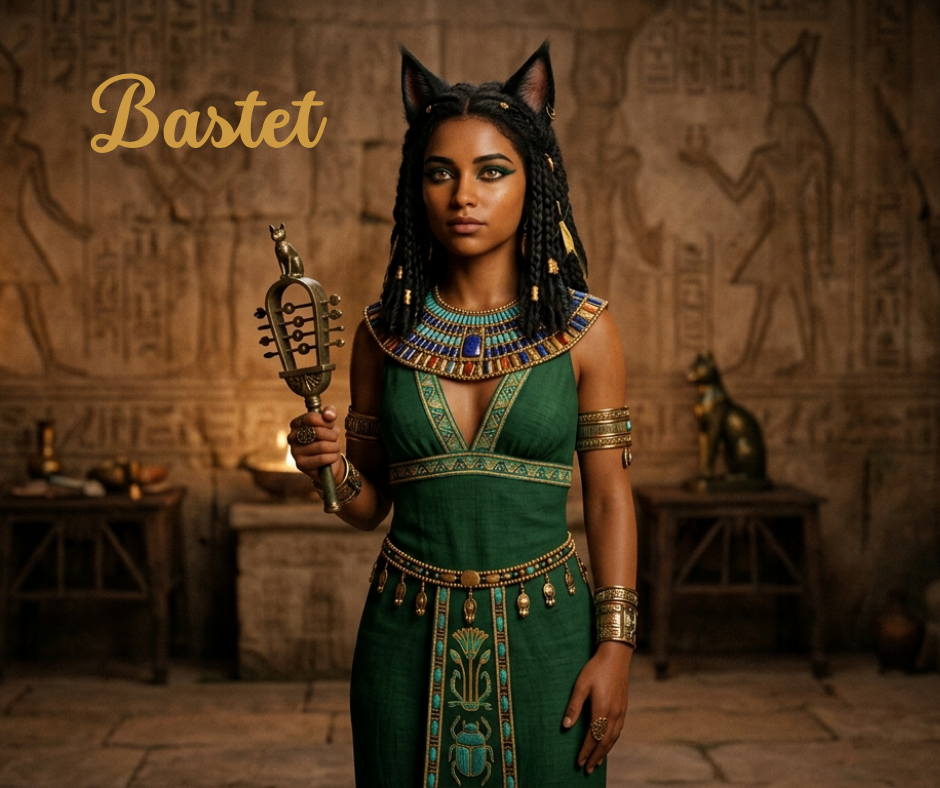
Bastet, Egyptian Cat Goddess, and patroness of Bubastis
Africa
Egypt
Bastet
The cat goddess of the ancient Egyptians she continues to protect and watch over us today. Like any good cat mom. Women and children are her domain, and kittens of course. She is thought to have the ability to protect both from disease and illness.
Bastet rose during the Second Dynasty and continued into Greek and Roman Empires. Her temple at Bubastis drew enormous festivals. Cats in Egypt were so protected that harming one, even accidentally, could be punishable by death.
As Bastet is the cat goddess, the most obvious sign that she’s connecting with you is the presence of cats, literally or figuratively. For instance, you might find that you are followed by cats, that you find a stray that feels like ‘yours’, or that you see cats wherever you go.
There might be cats around in less obvious forms, too. The page of a book opens at a picture or section on cats, for example, or maybe somebody gives you a piece of jewelry with a feline image.
44 Pages Digital Download, Great for Grimoire, Study, Learn who Bastet is and why she still matters to modern practitioners.
Mafdet (Ancient Egypt)
Mafdet predates Bastet, making her likely the oldest cat deity in Egyptian history. During the First Dynasty, she was regarded as protector of the pharaoh's chambers and gaurded the royal family from snakes, scorpions and evil. She was the first deity of legal justice in Egypt and is depicted as a cheetah, or occasionally a mongoose. Before cats were common household animals, Mafdet was already sacred.
Depictions in royal tombs associate her Mafdet with Anubis, suggesting that she accompanied the gods as a hunter or executioner while Anubis fulfilled his role as messenger and attendant
What Mafdet represents: swift justice and protection from venom, literal and metaphorical.
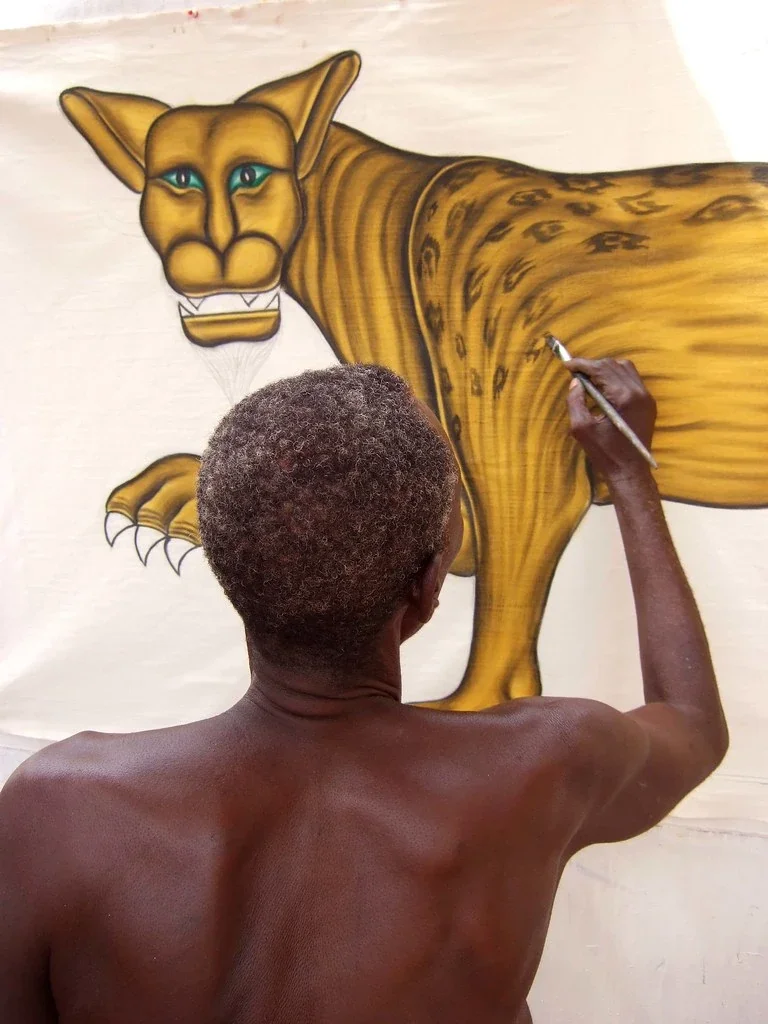
Cyprien Tokoudagba - Agassou painting
Benin Painter and Sculptor (1939–2012)
West Africa (Benin & Togo)
Agassou the Panther (spirit)
Agassou is the child of the human princess Aligbonu and a leopard. In the Dahomey religion he is honored as a tohuio (ancestral spirit) along with his mother. His day is Thursday and his colors are brown and gold. His feast day is August 25.
He was brought to the Americas during the forced slave trade and continues to be part of Hatian Voodoo. In Haiti, he is generally venerated as the lwa (spiritual entity) of home, family, lineage, and ancestry. He may appear as a man or leopard. The crab is also his sacred animal.
America’s
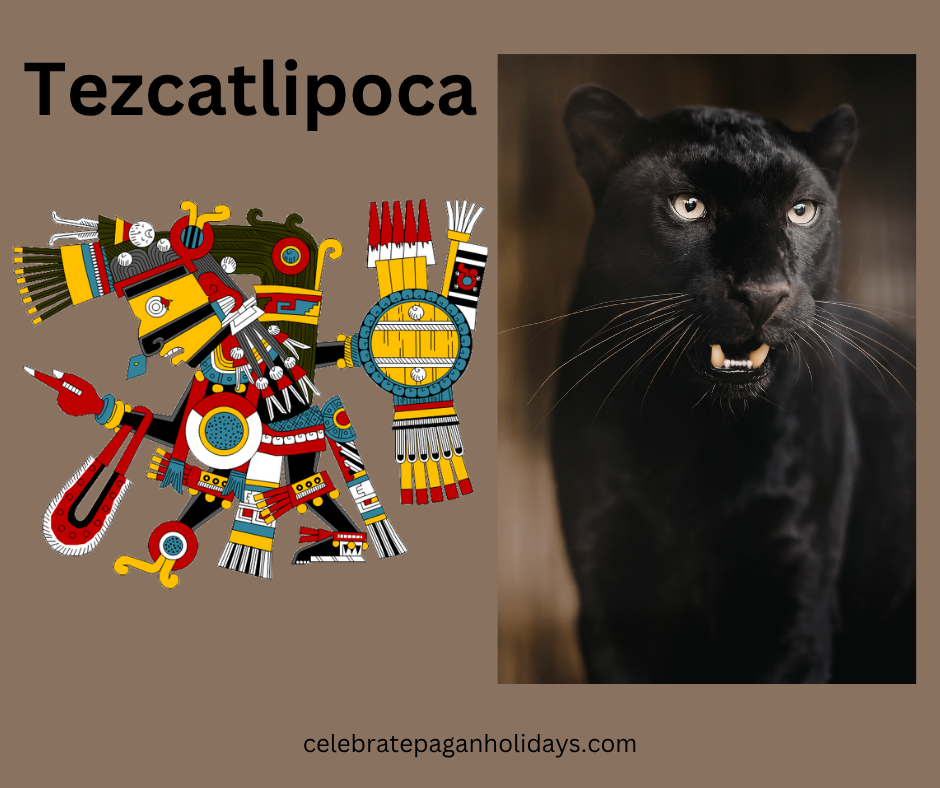
Aztec god of god of the night sky, hurricanes, obsidian, and conflict
Aztec
Tezcatlipoca
Tezcatlipoca is the Jaguar god. The god of the night sky, hurricanes, obsidian, and conflict. His nagual or personal guardian spirit is the jaguar. In artwork he is shown with horizontal bands of black and yellow. The jaguar is a powerful symbol of courage, stealth, and protection. As a spirit animal they guide us through the unknown, encouraging self confidence.
Ojibwa
Mishipeshu
And around the great lakes where I live we have Mishipeshu. He or they are quite interesting. Known as the Underwater Panther, he lives in the depths of Lake superior. He has the head and paws of a giant cat but is covered in reptile scales and has dagger-like spikes running along its back and tail. Mishipeshu are sometimes considered a male spirt or a race of spirits varying among great lake cultures.
Mishipeshu actually roughly translates to Great Lynx. Some traditions believed the underwater panthers could be helpful, protective creatures or more often they were viewed as malevolent beasts that brought death and misfortune.
Mishipeshu was the cause of waves, rapids, and generally turbulent waters. He is sometimes blamed breaking the ice under people during the winter. However, Michipeshu was also associated with protection and medicine, and praying to him would ensure a successful hunt or fishing catch.
They often need to be placated for safe passage across a lake. Which I remember when I go out kayaking.
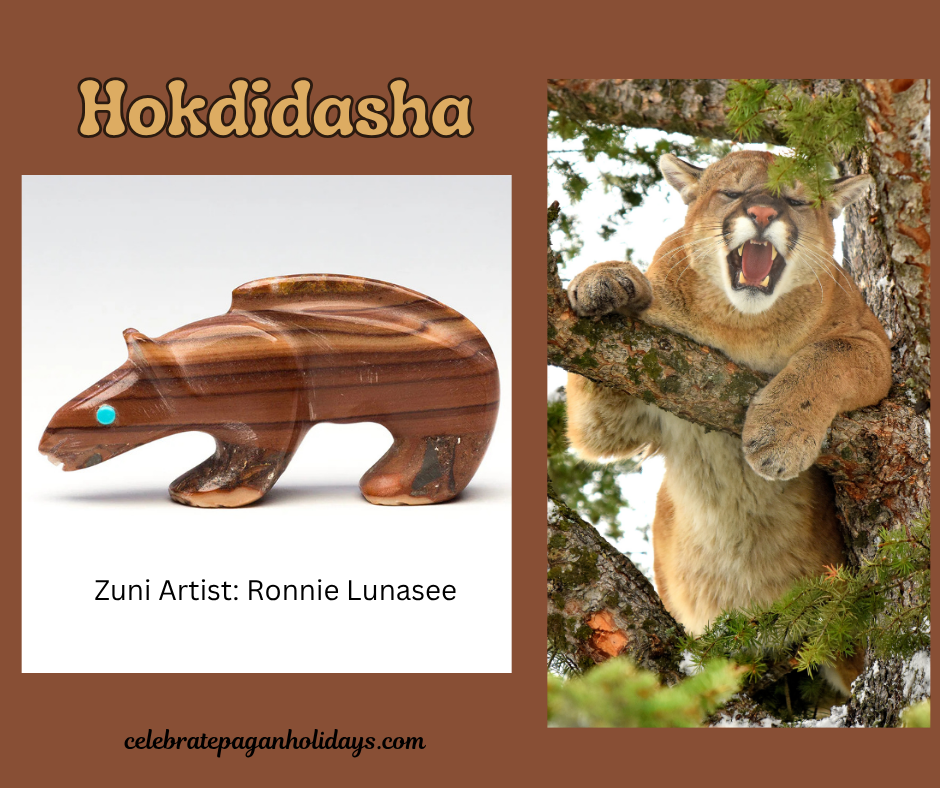
Hokdidasha is the Zuni Mountain lion or cougar spirit
Zuni
Hokdidasha is the Zuni Mountain lion or cougar spirit and is represented in small fetish carvings. They protect the north and are the elder brother of all animals.
The Zuni revere the mountain lion for its leadership, resourcefulness, cunning, and fierce protectiveness. A mountain lion fetish is often carried by hunters to ensure a successful hunt and by travelers for protection on their journey.
Asia
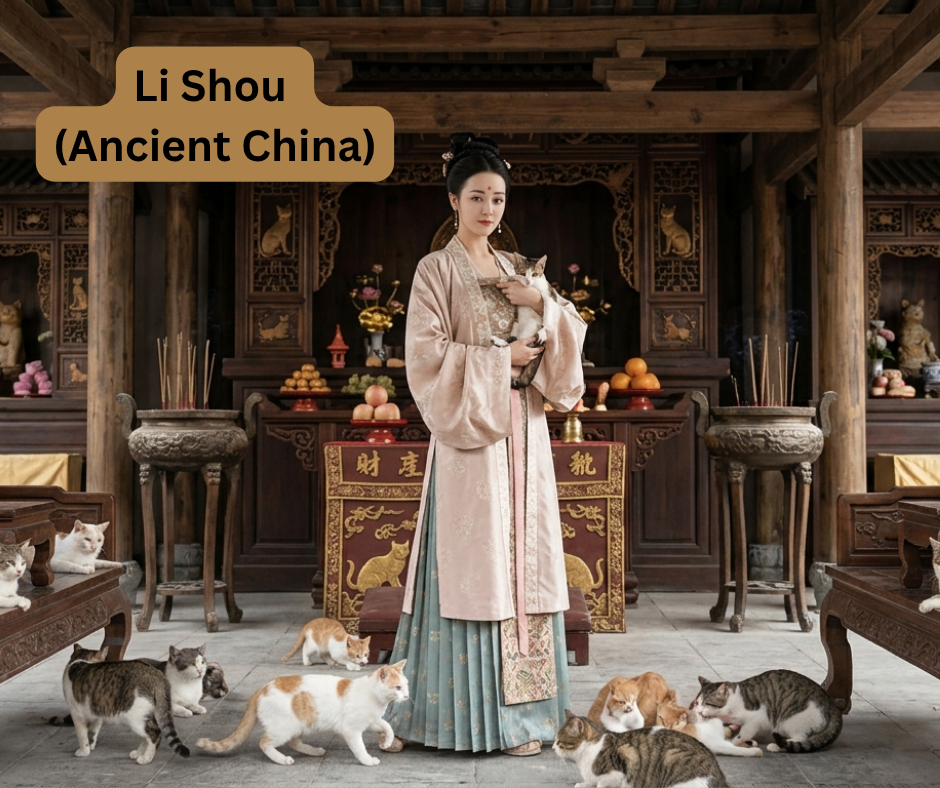
Li Shou
Li Shou is a popular neopagan Chinese goddess who is not well documented. It is said that Chinese farmers worshipped Li Shou for practical reasons. Cats kept the grain stores safe. But that practical relationship became sacred.
She represents abundance, protection of the home, and the very cat-like preference for living on one's own terms.
While there is no archaeological evidence of Li Shou its well documented the Ancient Chinese kept cats as mousers and pets. The Book of Rites dating back to 400 BCE has a ritual to offer a sacrifice or offering to cats.
Europe
Greek
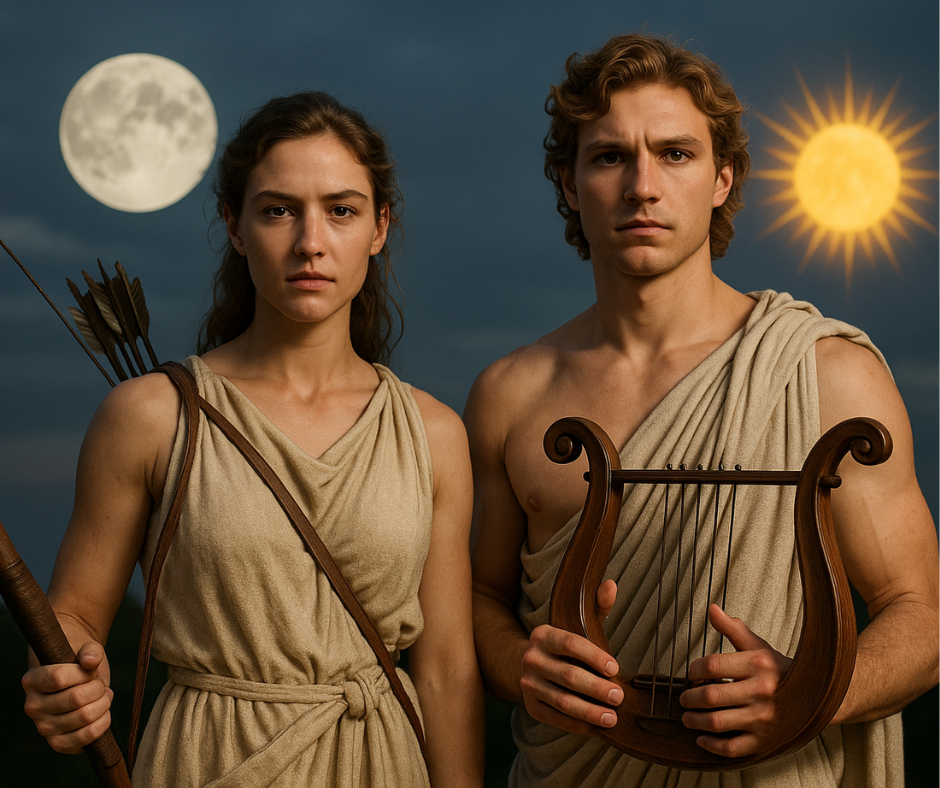
The Greek gods Artemis and Apollo
Artemis
Artemis goddess of the hunt was often associated with deer and dogs. However, when her father Zeus was challenged by the monstrous creature Typhon she and her brother Apollo were at the battle.
According to early Greek writings, Artemis transformed into a cat while fleeing the monster Typhon. This makes sense because cats are associated with independence and Artemis was all about doing things her way.
This also makes sense because the Greeks equated Artemis with the Bastet, just as they equated Apollo with Horus and Typhon with Set.
Artemis, the Greek goddess deeply connected to wildlife, nature, and feminine strength. Discover modern practices that honor her through wildlife conservation, independence, and mindful living. Join me as we uncover meaningful ways to celebrate Artemis and bring her powerful, wild spirit into your everyday life!
Norse
Freyja is the Norse goddess of love, beauty, war, and magic. She is famously depicted riding a chariot through the skies pulled by two large cats.
There names and breed are NOT specified in the ancient Norse Eddas, but popular folklore assume they are Norwegian Forest Cats named Bygul and Trjegul.
In Norse tradition, cats symbolize intuition, good fortune, and independence. Because cats don't easily submit to commands, the fact that they willingly pull Freyja's chariot suggests they are loyalty companions rather than subjects.
Slavic
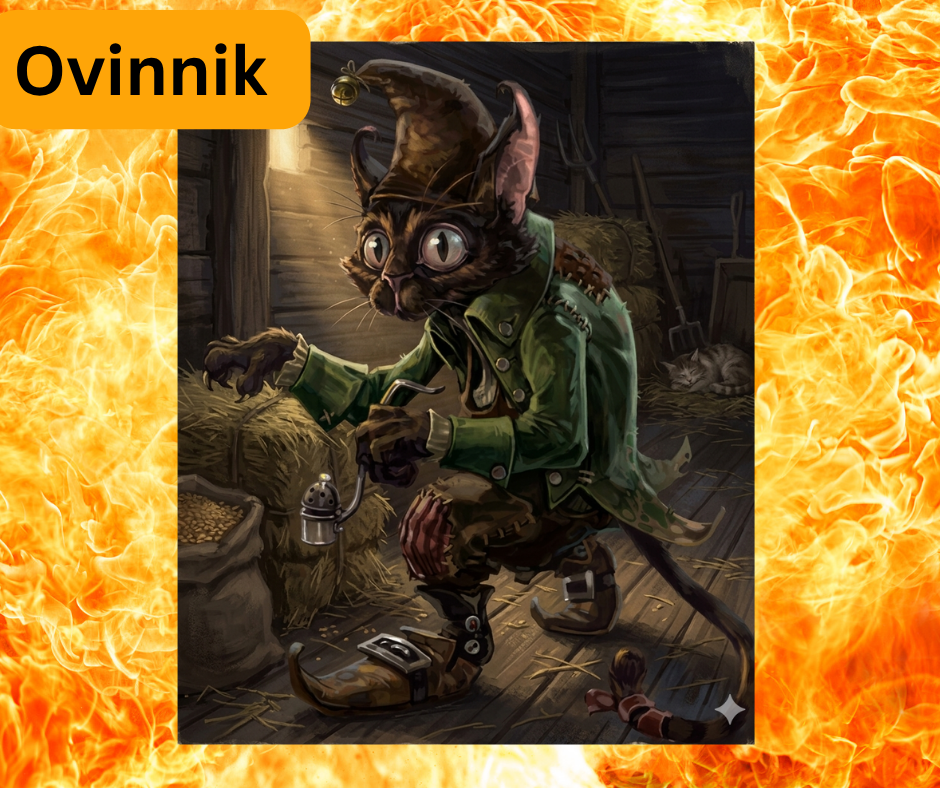
Ovinnik is a Slavic malevolent spirit. He is prone to burning down the threshing houses by setting fire to the grain. Fail to honor him, and he'd burn your barn to the ground. To placate him, farmers would offer him roosters and blee -nee
What Ovinnik represents is the dangerous gift of protection. Honor what guards you, or face the consequences. Cat logic.
History of Cats and Humans
Cats have lived alongside humans for at least nine thousand years. Archeologists found a burial at a Neolithic site on the island of Cyprus that dates back to 7500–7200 BCE. A cat was buried with a person, so obviously a companion animal. All domestic cats descend from the Middle Eastern wildcat, Felis sylvestris, which literally means "cat of the woods." They were first domesticated in Middle East's Fertile Crescent. This makes sense since the rise of agriculture also brought the rise of rodents!
Scientists feel that cat domestication was a gradual and natural thing. Unlike the dog which was effectively “trained” cats were merely following the prey and welcomed by the farmers. So a natural relationship occurred.
As you can see above, many cultures respected and elevated the cat to a sacred position. Sadly after Christian conquerors the cat support wanned. In fact, during the Middle Ages when they were seen by many as being affiliated with witches and the devil, and many were killed in an effort to ward off evil. Ironically, this most likely helped to spread the plague. The plague was spread by fleas which were often on mice and rats.
What These Deities Share
Protection of the home and threshold. Bastet, Li Shou, Ovinnik, and Shashthi all guard the domestic space including crops, children, and households. Cats were valued everywhere they appeared partly because they kept rodents away from food stores. That practical reality became theological.
Magic and the liminal. Artemis, Freyja, and others connect cats to magic, vision, and the spaces between worlds. Cats move at night. Their eyes glow in the dark. They appear and disappear. They stare at things we can't see. Ancient peoples weren't wrong to find this uncanny.
Dual nature. Bastet and Sekhmet, gentle and destructive, are the same force in different aspects. Freyja rules both love and war. Ovinnik protects and punishes. Cats domesticated themselves, they came to us, not the other way around, and they've never fully given up their wildness. Deities who carry cats seem to carry that same quality: deeply nurturing and capable of real danger.
Author Katherine Asha Fox is a writer and editor at CPH. You can learn more about us here.


Have you ever wondered how ancient Egyptian goddesses can inspire us today? Bastet, the Egyptian cat goddess is more than just a figure from mythology - her energy is alive and relevant today. Even though thousands of years separate us from ancient Egyptian culture, Bastet’s values remain relevant. By embracing her principles, we can reshape and enrich our lives, learn to find balance, and give back to our communities.