Horses running through a field make a beautiful, majestic sight and are a powerful animal guide. Humans have long been enamored with and aligned with the horse as a means of transportation. In fact, this spirit animal has been instrumental in driving cultural advancements.
I was raised on a horse farm in Kentucky and have a special connection with horses. My own horse, Rocket, is a rescue, a pet, and one of my best friends.
Continue reading to learn more about how the horse may be helping you as an animal spirit guide.
Natural History
Humans domesticated horses about 5,000 years ago but wild populations of horses still exist around the world. Most of these are feral populations and not true wild animals. The endangered Przewalski's horse, native to central Asia and Eastern Europe is the only true wild horse.
Horses evolved as prey animals and have a strong flight response to danger. They are well adapted to quickly run long distances.
Fun Facts:
Superfast reflexes and can kick out at perceived danger in 0.3 seconds.
They can sleep standing up.
They have 10 different muscles in their ears alone.
Characteristics and Symbolism
Transportation and Journey’s
Stamina
Leadership
Trust
Honesty
Playfulness
Freedom
Sexuality
Protection
Horse As a Spirit Animal
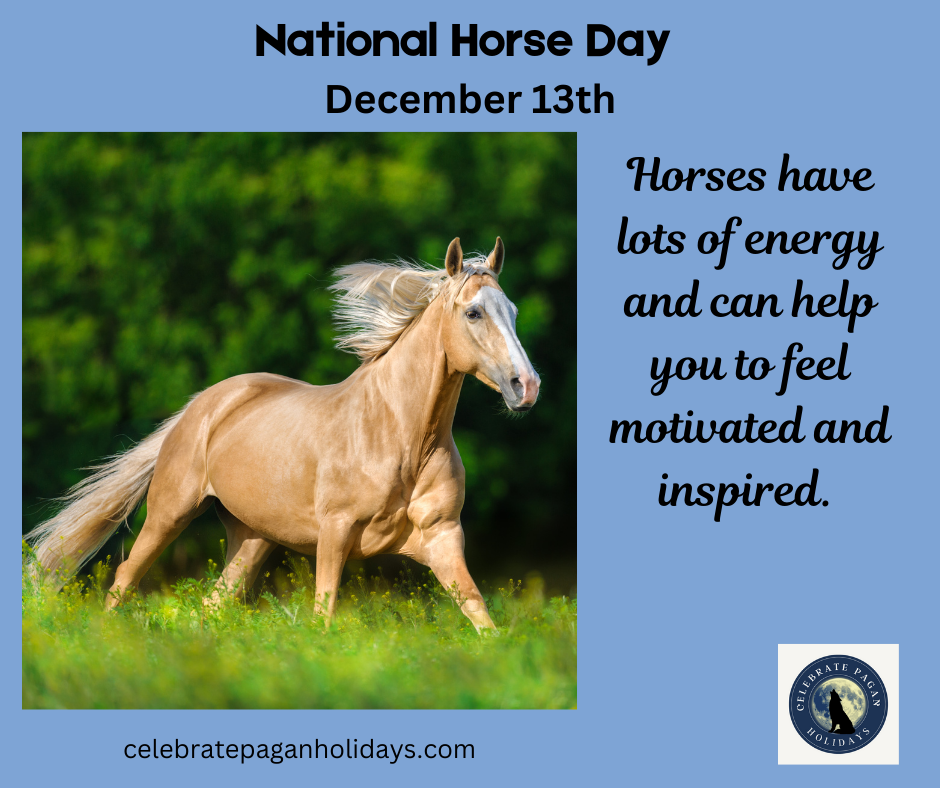
Horses have lots of energy and can help you to feel motivated and inspired.
We think of them as powerful symbols for primal drives of freedom and sexuality. Horses represent fertility and are good for magic dealing with love, lust, and fertility.
The horse can alert you to danger and help you overcome obstacles. Pay close attention if a horse suddenly appears to you in a dream or during meditation. Call on the horse when doing protection magic.

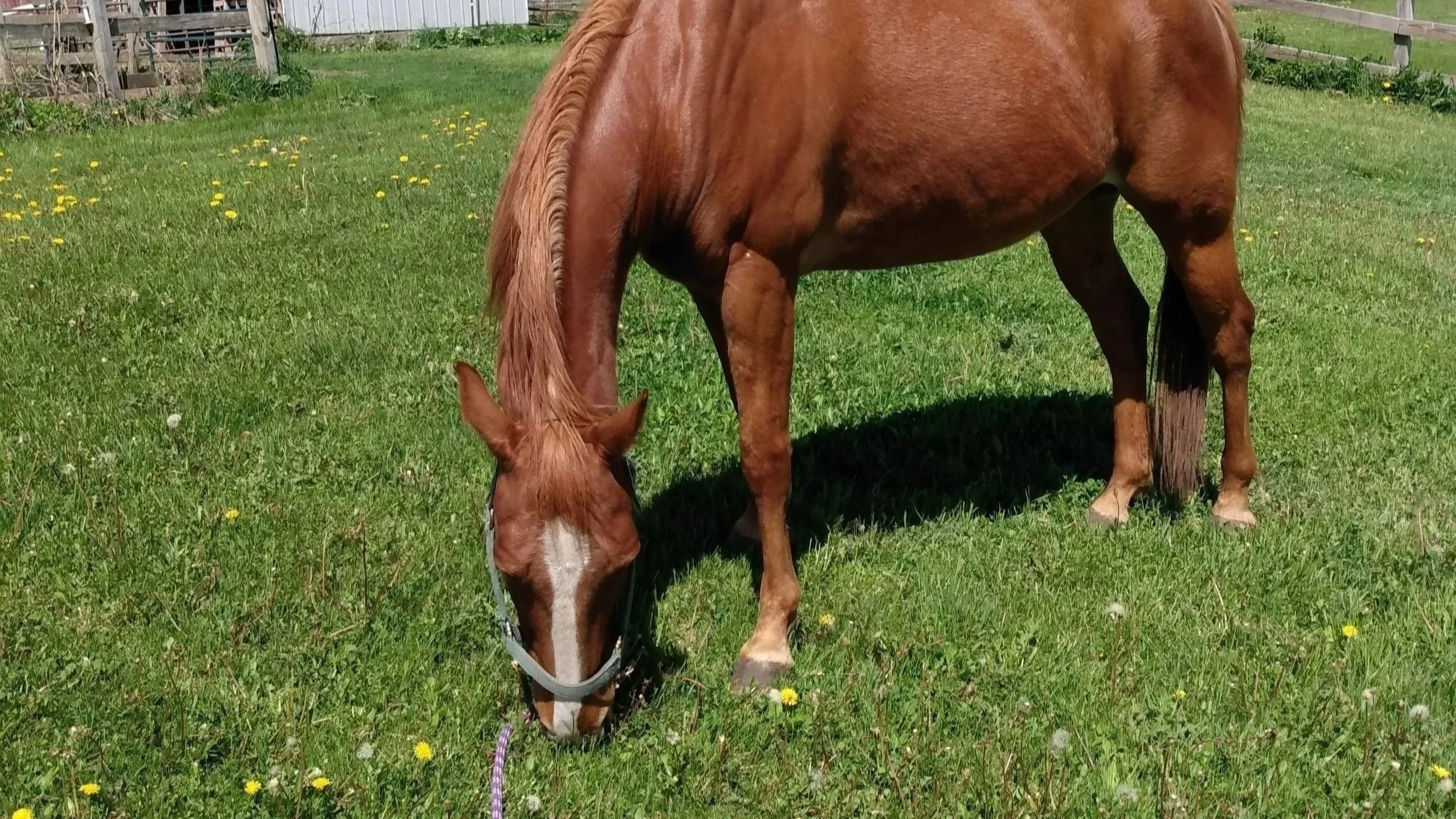
A symbol of protection, my horse Rocket, loves to be the gate greeter! Photo by Ame Vanorio
Mythology/ cultural traditions
Norse
The Norse God, Odin, rides an eight-legged horse named Sleipnir and is widely represented in Nordic writings and art. He is the son of the trickster god Loki and the giantess stallion Svaðilfari. Despite his unusual parentage, Sleipnir is celebrated as the finest and fastest of all horses, a calm, powerful presence who can travel where ordinary beings cannot, making him a rare bridge between realms. His eight legs are often interpreted as a symbol of supernatural speed and the ability to transcend limitations.
Odin rides him throughout the nine worlds contained within the branches of Yggdrasil. Odin is a wanderer, a seeker of knowledge, and sometimes a psychopomp who guides souls. In this partnership, Odin’s pursuit of wisdom is matched by Sleipnir’s ability to navigate the pathways between worlds.
Symbolically, Sleipnir like all horses represents movement, transition, and the power to cross thresholds—physical, spiritual, and emotional. For modern pagans, he can embody liminality, shapeshifting, and the courage needed to journey into the unknown.
Greek
Horses hold a meaningful place in Greek mythology, appearing as companions of gods, symbols of natural forces, and symbols of power. From the winged horse Pegasus to the man-eating mares of Diomedes, horses embodied both the beauty and the unpredictability of nature.
The Greeks, who lived in a landscape shaped by mountains and seas, understood horses as animals that bridged worlds. Fast, strong, and capable of carrying a person for long distances, they were revered not only for their usefulness but for the sense of awe they inspired.
Greek God of the Sun, Helios, drove the sun from east to west in his chariot pulled by four horses. The names of his horses are reflective of the fiery nature of the sun. They were named "Pyrois" (Fiery), "Aethon" (Blazing), "Eous" (Dawn), and "Phlegon" (Burning).
We know Poseidon as Greek god of the sea but he is also the god of horses. He is directly associated with their creation and is often depicted as their father. He is considered the father of the winged horse Pegasus, who’s mother was the former priestess and Gorgon Medusa.
In fact, the earth goddess, Demeter transformed into a mare to escape the unwanted advances of Poseidon. However, he found her, transformed himself into a stallion, and forced himself upon her. Demeter gave birth to two children, Arion and Despoina.
Celtic
Horses appear throughout Celtic mythology as trusted partners, symbols of status, and guides between the human and the spirit worlds. Celtic stories describe horses as intelligent and loyal, with the strength to carry warriors and the intuition to sense danger or magic long before people do.
The Celtic Goddess, Epona, is the protector of equines and led souls into the afterlife. Artwork representing her riding or standing with a horse has been found throughout Northern Europe and attests to her importance. Her statues are often found in stables. Epona's worship was particularly popular among the Roman cavalry.
Macha, an Irish goddess, connects horses with sovereignty and justice. Her stories teach that a leader’s strength depends on fairness and a healthy relationship with the land. The water-associated horse beings—like the Each-Uisge and the Welsh Ceffyl Dŵr—reveal the wilder side of horse lore, reminding people that nature has boundaries and must be respected.
They move easily across land and water in the stories, which makes them messengers or companions during times of transition. For modern pagans, horse symbolism can encourage resilience, clear direction, and a grounded connection with the land. The Celtic view sees horses not just as helpers but as beings with their own agency, teaching us that cooperation with nature leads to strength and balance.

Several years ago we went to see the Terracotta Army exhibit at the Cincinnati Art Museum about the Zhou dynasty (1046–256 BC). These terracotta figures showed how important horses were to ancient Chinese culture. Photo by Ame Vanorio.
Chinese
Horse represents energy, independence, and a strong life force. People born in Horse years are described as quick thinkers who move with confidence and enjoy freedom. This reflects how horses shaped early Chinese society. They made long-distance travel possible, supported farming and trade, and became symbols of progress. In myths, horses often act as loyal helpers who guide heroes through difficult journeys. Their speed and spirit made them natural symbols of forward motion and good fortune. People born in 1930, 1942, 1954, 1966, 1978, 1990, 2002, or 2014, are a Horse.
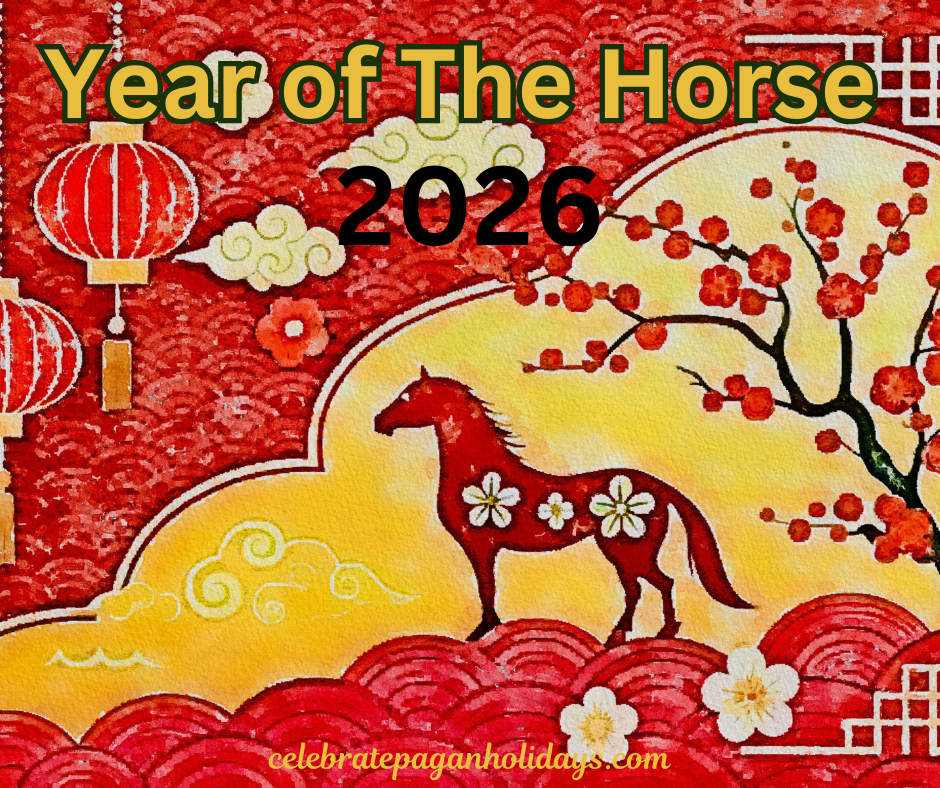
2026 is the Year of the horse!
Beginning on Feb. 17, 2026, the Year of the Horse, is a dynamic and action packed adventure. This year is typically characterized by rapid change, passion, and independence. Horses are associated with strength, speed, and freedom making this Chinese zodiac full of bold, energetic spirit.
Key, lucky elements for the Horse include the colors red, green, and purple, and numbers 3, 4, and 9. Fire Horse year, 2026 is expected to bring intense, transformative, and fast-paced energy, favorable for career advancements and bold decisions.
People born in these years are generally considered brave, independent, loyal, and energetic, though sometimes stubborn or restless. Horses are often compatible with Tigers, Sheep, and Dogs, while needing to balance their need for freedom with, romantic commitments.
Chinese mythology includes several famous horses that highlight their cultural importance. The “Dragon Horses” were said to emerge from the Yellow River and bring messages about order and harmony.
The celestial horses of the Han dynasty, sometimes called “Heavenly Horses,” were prized for their strength and endurance, believed to sweat blood, and having divine origins. These horses symbolized power.
Archaeology gives us more insight through the Terracotta Army of the Qin dynasty (picture above), which includes hundreds of life-sized terracotta horses. These horses show detailed harness systems, and strong, alert expressions. Their presence in the tomb tells us how essential horses were for warfare and transportation. It also shows the high level of care given to breeding and training military horses. From the Terracotta Army, historians learn about early Chinese chariot design, stable practices, and the central role of horses in building and protecting the Chinese state.
Speaking to Us in Dreams
Horses have been bred for specific functions such as racing, pulling plows, or transportation. The specific breed that comes to you in a dream may be indicative of what you need. Different breeds carry different histories and traits. Those traits can help us understand what the dream may be pointing toward in our own lives.
A Thoroughbred in a dream often represents drive, speed, and high expectations. These horses are bred for performance, so their presence can point to ambition or pressure. You may be pushing yourself hard toward a goal, or you may feel that others expect you to “perform.” A calm, healthy Thoroughbred may suggest confidence and momentum. A stressed or agitated one may signal burnout, or the need to slow down and pace yourself.
Heavy draft breeds such as Clydesdales, Percherons, or Shires tend to symbolize strength, endurance, and steady progress. Seeing one of these horses in a dream can reflect a situation where you’re carrying a lot of responsibility. It may also show that you have more inner strength than you realize. These horses work slowly but reliably. Their appearance may encourage patience, teamwork, or persistence through a long-term project.
Arabians may reflect sensitivity, intuition, or a need for balance between emotion and action. Mustangs can point toward freedom, independence, or breaking away from limits. Shetland ponies may symbolize simplicity, play, or learning something step-by-step. When interpreting a horse dream, it helps to look at what the breed is known for, how the horse behaves in the dream, and what is happening in your life right now. Spirit animals come to us to help us reflect on our strengths, challenges, and next steps.
Carl Jung, a noted psychologist, felt the appearance of horses in dreams signified instincts out of control and the need for greater mastery. He saw the horse as a Mother archetype representing the unconscious mind and visions.
This archetype is seen in the beautiful Valkyries riding their horses over the battlefield as well as the Trojan horse who enclosed the Greeks during battle.
If you dream you are afraid of horses you may be sensitive, need to control emotions, or need to be free of something. Fear of losing freedom is often associated with horse dreams.
A horseshoe seen in a dream is a symbol of “chance” and good fortune. A positive change is coming your way.
Divination
The horse is a powerful symbol of divination and is associated with clairvoyance. The horse’s psychic abilities allow them to communicate with the dead.
Hippomancy is a specific form of divination practiced by several cultures including the Celts. It is an art for divining the past and future by using horse omens. The Celts kept herds of white horses in consecrated groves. Their movements were watched for omens and auguries telling about the future. The horse’s movements, neighing, and stomping of feet were all signs.
Slavic tribes used white horses as oracles having them step over spears laid out in front of a holy building. In medieval Poland and Pomerania, priests used white horses stepping over spears laid on the ground for divination, a practice that Christianity later opposed.
We sometimes see Death in tarot as being a pale horse. This symbolism comes from the Bible and the Four Riders of the Apocalypse. The card’s meaning is not limited to physical death but often means a transformation or rebirth.
What Do Horses Teach Us
Horses teach us to feel grounded and focused. Spend time outside in open areas such as a prairie field or beach. Take in the calmness.
The horse teaches us the importance of leadership and having a trusted guide or mentor in your life.
Horses symbolize new journeys and taking a new direction. If a horse comes to you then it’s time to examine your path.
People with a horse spirit guide tend to express themselves well and have strong energy. However, they must remember the importance of balance and listen to others. Horse people benefit from reflection.
Horses teach us about determination and not giving up. Sadly, the horse has been abused by men over time and forced to be a “workhorse” instead of a partner. However, we can use that determination to do good in the world.
The horse teaches us to focus on the ultimate goal and not the obstacles in our path.
Endurance goes hand in hand with determination. The horse helps you to play the ‘long game’ and follow through to your goals.
The Mustangs are a popular sports team name to represent determination and endurance.
In all our seriousness, horse teaches us to have fun and play. Run free, dance, and kick up your heels once in a while!
Meet Rocket and I in my video about the horse spirit animal
What Careers Do People With Horse Do Well In?
Horses are about balance and tell us don’t overwork. Find that workplace balance. Remember to enjoy life. If you’re feeling off-balance trying spreading your toes and sink into the earth. Think about how the horse balances on their hooves as they run.
The horse represents people who like to work autonomously. Horses are hardworking and industrious.
Athletes relate to the power and strength of horses. They resonate with the heart chakra - willingness to give it their all - and lift up persons in fields such as social work, teaching, and nursing.
The Chinese feel that people born in the year of the Horse are good mathematicians because they recognize patterns and are very intelligent.
Wild Horses and Conservation
Przewalski's horse is a truly wild horse, native to parts of Asia and Eastern Europe, that is critically endangered. Conservation efforts have included breeding programs and releasing young horses back into the wild.
Wild horses have been reintroduced into Mongolia, China, and Russia. One of the largest herds is in the de facto nature preserve surrounding the former nuclear site Chornobyl in Ukraine.
Unfortunately, this area has been affected by the current Ukraine/Russian war. Sadly one wild Przewalski's horse was killed by a Russian mine in the Chornobyl Exclusion Zone. The horse was found in the protected area of the Chornobyl Radiation and Ecological Biosphere Reserve.
The Mustangs of the American west are actually descendants of wild horses. They are protected animals with about 30,000 running free on various public lands today.
Sadly the US government performs “round-ups” periodically, removing the animals from their homes, and selling them to private citizens. These horses may then be trained to ride or for other “jobs”. Some of these mustangs are not easily adaptable and remain in holding centers for long periods of time.

Author, with her best pal, Rocket.
Ame is the founder of CPH, an eclectic pagan, environmental educator, and a horse lover.

The sharp caw of a crow outside your window, the sight of ravens dancing on wind currents, or a murder of crows gathering in your yard—these moments often feel charged with meaning. For modern pagans and spiritual seekers, these corvids represent far more than clever birds. They serve as bridges between worlds, messengers from the divine, and powerful spirit animals that have captured human imagination for millennia.