November 2026
November is a bridge between the final harvest and the deep quiet of winter. For many of us this is the start of a new year. November is about transitions, looking back at our ancestors and forward to new challenges.
This is a great month to set aside the baggage of your past, and do workings that focus on developing new skills and mindsets. November isn’t about avoiding the darkness but learning to find your light within the dark. The magic of this month lies in surrender, stillness, and trust. Lean into it!
Work on developing and strengthening your connection with Deities. Coming on the heels of Samhain, use this month to embrace the darkness, and to mourn or grieve in your own fashion for things you have lost this year. Allow yourself to let go.
The wild creatures are making their last preparations for winter and in some cases hibernation. You can read my environmental article on Nighty Night, Sleep Tight! Hibernation, Brumation and Torpor Explained.
Correspondences
Symbols: Dreamwork, Mirrors, Protection, Release, Shadow integration, Skeleton keys, Trees
Abode or Planet: Mars, Pluto
Zodiac Signs: Scorpio, Sagittarius
Color: Black, Purple, White
Divination: Connecting with our ancestors, runes, scrying mirrors, tarot cards
Elements: Water
Animals: Bear, Beaver, Wolf
Plants: Fennel, Thistle
Trees: Cyprus, Elder, Pine, Yew
Flowers: Chrysanthemum, White Lily
Herbs/Spices: Dragons blood, Ginger, Hops, Hyssop, Mugwort, Nutmeg, Patchouli, Pine, Rosemary, and Wormwood
Stones: Apache tear, Obsidian, Onyx, Topaz
Birthstones: Topaz and Citrine
Related Deities: Banshees, Cailleach, Cerridwen, Circe, Cybele, Freyja, Hathor, Hel, Holda, Horned God, Kali, Maman, Mars, Nepthys, Pluto, Sekhmet
Celtic Month of Reed October 28 - November 23
The Celtic Month of Reed started October 28 and goes to November 23. The reed represents adaptability, communication, and the connection between life and death. Reeds grow in wet, liminal spaces — along the edges of rivers, marshes, and lakes. These borderlands are sacred in Celtic thought, existing between the realms of land and water, mortal and spirit.
Reeds are flexible and that is beneficial as this month often brings changes. They also remind us that winter is near and we must prepare.
Reed is represented by the symbol Ngetal (Ng). It signifies direct action, clarity of intent, and communication with purpose. When this symbol appears in divination, it often encourages us to cut through confusion and express ourselves honestly.
Native American Month
In the United states this is Native American month when we celebrate the first people to settle in America over 20,000 years ago. They settled all over the continent developing unique cultural and religious practices.
1 - Happy New Year - Celtic after Samhain
For some of us November first is New Years day coming at the end of the Celtic Celebration of Samhain. This is a great month to set aside the baggage of your past, and do workings that focus on developing new skills and mindsets.
1 - Last Quarter Moon
The last Quarter Moon, also on the first, is considered a period to release remaining burdens and prepare for a new beginning.
Best for: Reflecting on the past cycle, forgiving yourself and others, and letting go of remaining burdens.
If you enjoy working with crystals, this is a great time to do a crystal grid for renewal.
Rebirth & Renewal Crystal Grid
Intention: To invite new growth and hope after letting go.
Suggested Layout: Flower or star shape.
Crystals:
Center: Citrine which represents renewal
Surrounding: Moss Agate for growth and Lepidolite for balance
Outer points: Clear Quartz to amplify your intention
Tip: Add a bay leaf with your new affirmation written on it.
1 - Winter Nights/Vetrnaetr/Alfablot
Norse first day of winter honoring the elves (álfar) and ancestral spirits.
Winter Nights (Vetrnætr) takes place from Sunday, October 25, to Monday, November 9, 2026. It marks the transition from summer (sumarr) to winter (vetr) in the Old Icelandic/Nordic calendar. At this time only two seasons were recognized, summer and winter.
Like many of the winter celebrations, it is one of coming together as a community and boosting the morale of everyone to aid in the survival of winter with drinking, feasting and games. This would have been a time when anxieties peaked, a time that your physical and mental strength was truly put to the test. Luckily today, thanks to our technology and food availability it is not as stressful. (Albeit you may be stressing over grocery store prices right now)
Celebrate the Norse Winter Nights, (Vetrnætr) honor your ancestors, Skadi and Ullr. Transition to the dark, cold season of winter. Celebrate, feast, sacrifice, observe old rituals, and create modern ones.
Norse Leadership
Odin establishes Winter findings as the First Sacrifice at the start of Winter. This blot was held for a good year and would typically be the third night under the full moon.
As a woman one thing that stands out to me is the power and leadership of women. This is the kings daughter who in the Saga of Hervör and Heidrek is chosen to redden the altar with blood as part of the sacred rituals. An example of a woman leading an important religious role.
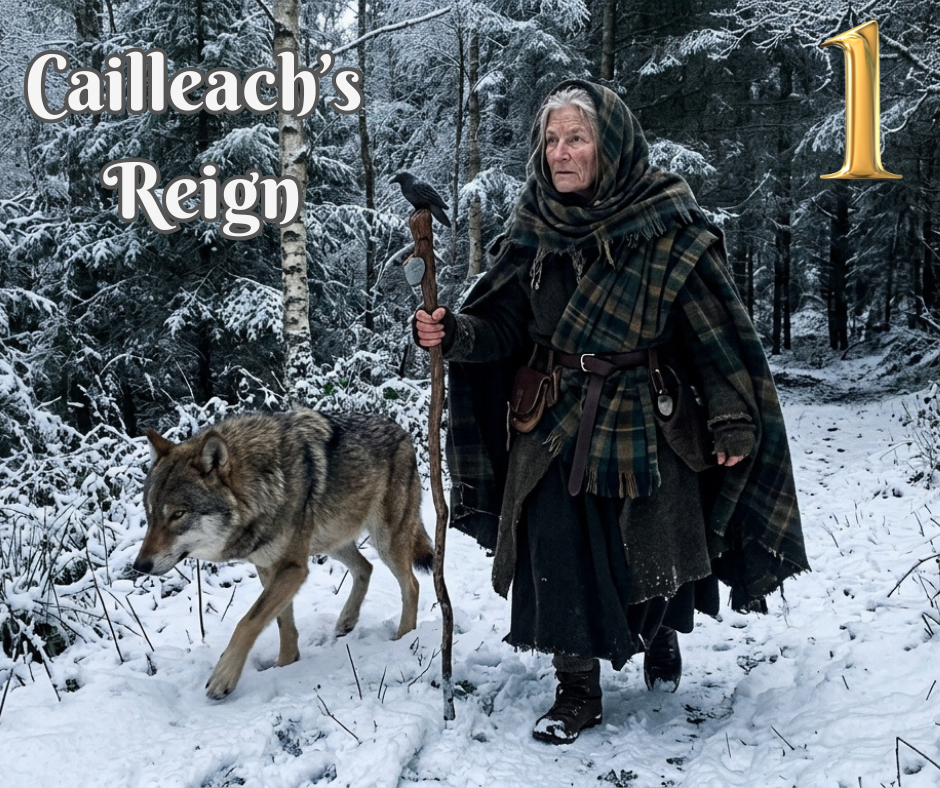
1 - Cailleach’s Reign—Day of the Banshees
Gaelic/Irish. Celebrate winter
Cailleach’s Reign and the Day of the Banshees falls on November 1st, marking the official start of the Cailleach's winter rule and the transition following Samhain. The Cailleach is a divine hag, associated with the creation of the landscape and with the weather, especially storms and winter. She rules between Samhain and Beltane.
In Scotland, where she is also known as Beira, Queen of Winter (a name given by 20th-century folklorist Donald Alexander Mackenzie), she created numerous mountains and large hills, many of which are named for her.
The Cailleach represents the wisdom of the Crone, the ancient archetype who teaches us to let go, to trust, and to befriend the dark. We often associate her with hag stones which are rocks with a hole all the way through its center. I often ask the Cailleach to bless mine. They have protective qualities and are often used as charms or hung over doors, to keep out negative entities.
This day is associated with honoring the banshees whose name bean sidhe, meaning "woman of the fairy mound". Traditionally, the wailing or lamenting of a banshee is believed to foretell the impending death of a member.
In ancient Irish lore they are also seen as ancestral spirits or guides who assists souls crossing over into the afterlife. The Wild Hunt is a group of ghostly hunters, hounds, and deities galloping across the night sky. The hunt is typically led by the Norse god Odin and/or the goddess Holda/Perchta, and serves as an omen of war, plague, or major change, as well as a time for honoring ancestors
It typically occurs during the stormy period between Samhain and the Winter Solstice (or across the twelve days of Yule) when the veil between the physical and spirit worlds is thinnest.
According to folklore, banshees or former forest/fairy spirits are sometimes envisioned crouching in moonlight or combing their hair with silver combs near ancient earth tumuli and burial mounds.
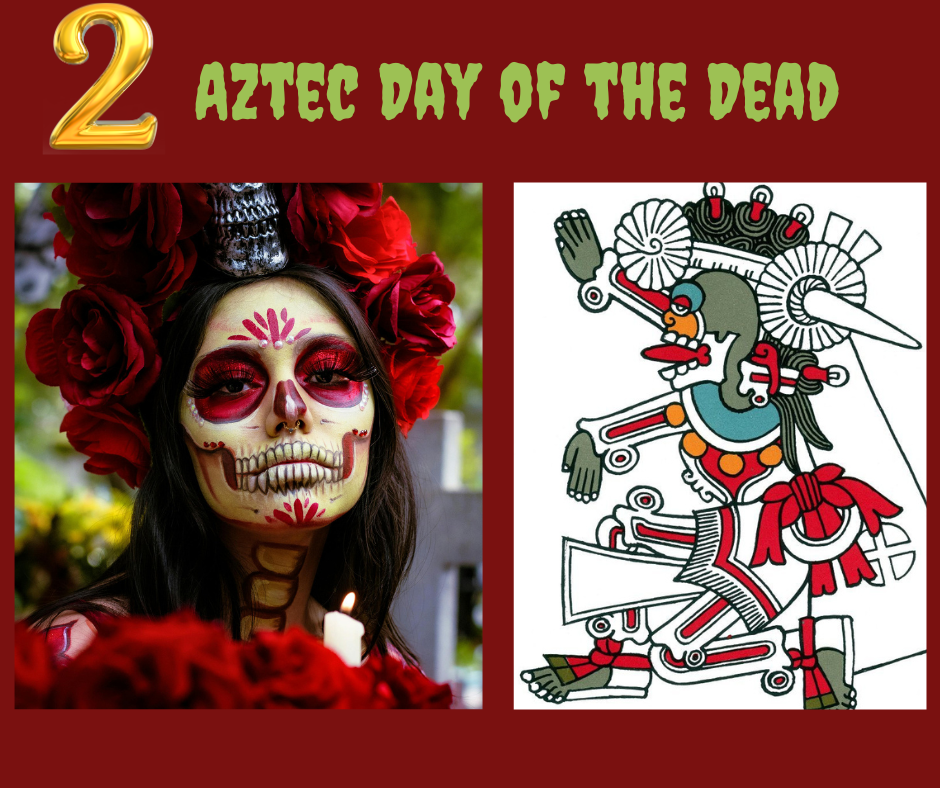
2 - Aztec Day of the Dead
Honoring the departed and Mictlancihuatl Goddess-God of the Dead
The modern Day of the Dead (Día de los Muertos) draws deep spiritual and symbolic roots from ancient Aztec and Mesoamerican traditions, which later blended with Spanish Catholic holidays.
The Aztecs worshiped Mictecacihuatl (Lady of the Dead), the skeletal queen of Mictlan (the underworld) who ruled alongside her husband Mictlantecuhtli.
The Aztecs preserved and displayed real skulls and skeletal symbols on temples to honor ancestors and remind the living that death is a continuation of the life cycle. Bright orange cempasúchil (marigolds) and copal incense were used in pre-Columbian rituals to guide and welcome returning spirits.
After the Spanish conquest in the 16th century, Catholic priests moved Indigenous death rituals to align with All Saints' Day and All Souls' Day on November 1st and 2nd. Traditionally, the Aztecs devoted two separate 20-day months in their ritual calendar to honor the deceased.
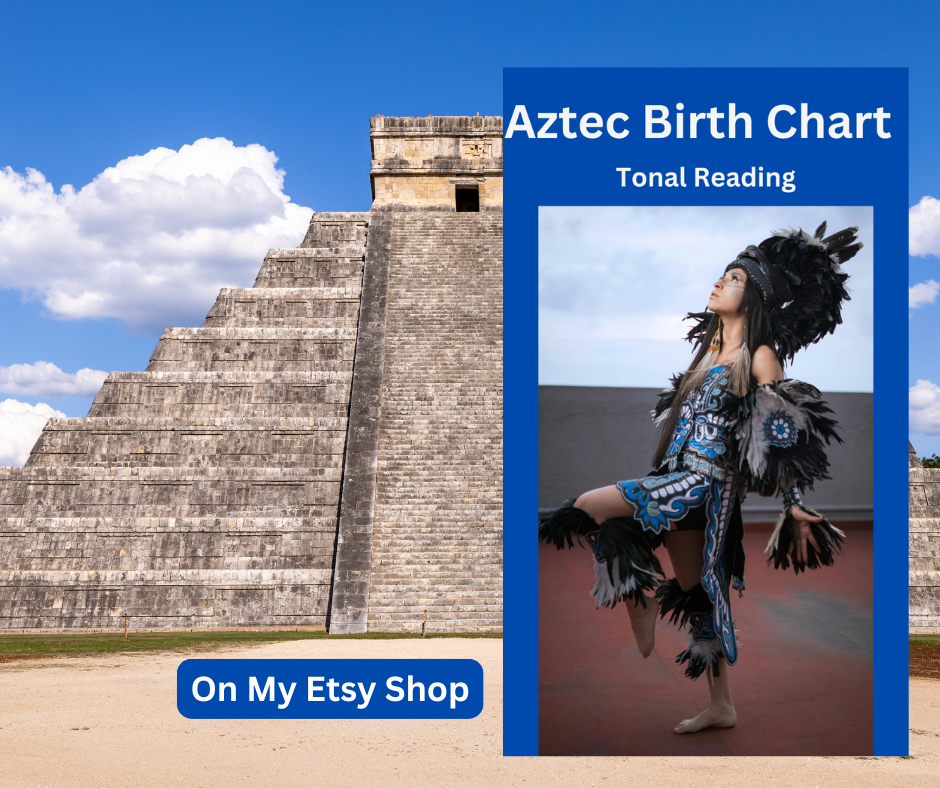
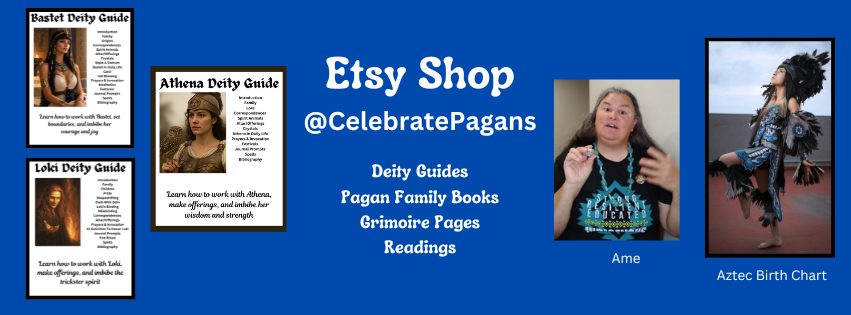
I also have a Tonal Reading or Aztec birth chart in my Etsy shop if you are interested in learning what deity and spirit animal from Aztec culture you align with. Human written (by me), detailed, with images.
2 - Hopi Ancestors' Day
Food offerings are put into rivers and lakes in honor of the ancestors.
Hopi and Zuni Ancestors' Day is a sacred Indigenous observance where community members honor ancestral spirits by offering food and dancing.
Water acts as a bridge connecting the physical realm with the spiritual and underworld dimensions in Hopi and Zuni traditions. For many living in the arid Southwest, water is sacred; water is life. Recently the Hopi Tribe, independent cultural resource advisors, and the USDA Forest Service honored that spirit when they came together for four days to restore an ancient spring.
Long before the Grand Canyon got its English name and became a tourist destination, the Hopi Tribe referred to the land as ‘Öngtupqa,’ translating to ‘Salt Canyon.’ Salt Canyon is an integral part of their spiritual homelands and where their ancestors emerged into this world as part of their creation story.
The wolf is a very powerful spirit animal in pagan cultures all over the world. Sadly wolves in nature are often persecuted for being what they are - predators. This video will help you learn the symbolism of the wolf as well as the importance of wolf conservation.
5 - Days of Wolves
Rodnovery celebration of the Cult of the Ancestors.
Days of Wolves are a celebration of the Cult of the Ancestors. It’s believed that souls of our ancestors, or souls of the dead, briefly come to visit Yav in the form of wolves.
During this period wolves are praised more than anything, up to the point that our ancestors even made sacrifices to them. Sacrifices were mostly in the form of mutton or bread, sometimes even animal sacrifices. In this way, you invite the wolf into your home to eat with you and try to earn its favor not to come again during winter to kill your livestock.
With this kind of sacrifice, it’s believed that you are also feeding the souls of your ancestors and earning their favor in Prav. This was a recurring event during the festival until the last day called Rasturnyak (Dispersion), the last time you let wolves eat with you before winter.
According to the Rodnovery beliefs, Dajbog gathers the wolves on Dispersion and leads them in one final hunt. In the old days, if this tradition wasn’t honored, people believed that wolf attacks on livestock during winter would be worse.
The deity connected to wolves is, of course, Dajbog. He is believed to be the main deity and protector of my people and has a special place in my culture.
Read my article on the Wolf: Wolf Spirit Animal: Complete Guide
According to some interpretations of medieval texts, Dajbog was said to ride across the sky in a chariot drawn by wolves. These celestial wolves guarded and accompanied the sun on its daily journey, ensuring its rebirth each morning. The image of the “wolf chariot” also reflects the idea that light and shadow are inseparable and that even the fiercest predator has a place within the harmony of nature.
6 - Raising the Djed Pillar
Egyptian celebration of good over evil
The Raising of the Djed was a sacred ancient Egyptian ritual that symbolized stability, cosmic order, and the resurrection of the god Osiris
Djed representing stability and human spine vv
It represented the triumph of Osiris over his brother Set, marking the restoration of life, agricultural renewal, and the cyclical rhythm of nature
Performed by the pharaoh (acting as Horus), the rite reinforced the king's legitimacy, divine protection, and power to maintain Ma'at (truth and balance) across the land
7 - American Bison Day
November 7 is the day of the bison. Today we honor Wi the solar spirit of the Lakota who is represented by the bison and the color red. He is married to the moon goddess Hanwi. Wi was created by Wakan Tanka, the great spirit. He symbolizes bravery endurance, and honesty.
8 - Bram Stokers Birthday (1847)
Author of the novel Dracula
Stoker was raised a Protestant, interest in the occult, his friends J. W. Brodie-Innis, a member of the Hermetic Order of the Golden Dawn, devoted to the study and practice of occult Hermeticism and metaphysics during the late 19th and early 20th centuries. Known as a magical order, the Hermetic Order of the Golden Dawn was active in Great Britain and focused its practices on theurgy and spiritual development. was an active Freemason,
He was weak, confined to bed, and treated with Victorian medical methods like bloodletting.
9 - New Moon
Perform a new beginnings ritual, and think about all of the possibilities that the future can bring.
https://www.learnreligions.com/perform-a-new-beginnings-ritual-2561406
11 - Dajbog
Rodnovery/Slavic Father God
Dajbog, also known as Daybog or Dazhbog, is one of the more important deities in the Rodnovery & Slavic pantheon. A sun god, a giver of prosperity, and a patron of life and warmth. His name means “the giving god” or “god who gives,” and that generosity was central to how the Slavic people viewed him: as a bringer of light, wealth, and vitality to the world.
Animals, as a crucial part of nature, also have a significant place in Rodnovery. Their impact on all aspects of our lives throughout the ages can’t go without notice, and in Rodnovery they receive special praise! Dajbog is connected to Wolves and they have their place in the celebration.
He is imagined to be an old man, wearing animal hide, with a walking stick. His description resembles the one of a druid. He is always in the company of an old lone wolf.
The Wolf and Dajbog are an unbreakable connection. That is the reason that both wolves and Dajbog are considered the first ancestors of my people.
11 - FEAST TO EINHERJAR
This day we honor the heroes who died on the battlefields.
The Feast of the Einherjar (often called Einherjablót) is a modern Germanic pagan and Heathen observance dedicated to honoring fallen war heroes, ancestors, and military veterans. In Norse mythology, the Einherjar ("those who fight alone") are the brave souls of fallen warriors handpicked by the Valkyries to live and train in Odin’s hall, Valhalla.
According to the poem Grímnismál, they spend their days fighting each other in mock combat and their nights feasting on the magical boar Sæhrímnir and drinking mead, preparing to fight alongside the gods at Ragnarok.
This corresponds to Veterans day in America.
Participants frequently visit local cemeteries to clean veterans' headstones, lay flowers, or place flags.
13 - Navajo Night chant
Yé'ii Bi Cheii
The Navajo Night Chant also referred to as the Yeibicheii Ceremony, is a healing ceremony that happens in late fall or early winter and extends for nine nights.
The Night Chant is a religious ceremony and healing ritual. It has two purposes.
To heal people who are physically or mentally ill
Restore balance to human relationships among the Navajo and the Universe
The ceremony is led by a medicine man who calls upon the power of the Yeibicheii to heal a patient.
©Celebrate Pagan Holidays LLC
13 - Epulum Jovis
Roman celebration to honor Jupiter
Celebrated twice a year on the Ides of the month—on September 13 (during the Ludi Romani or Roman Games) and November 13
was a lavish public ritual banquet in ancient Rome held in honor of the Capitoline Triad: Jupiter, Juno, and Minerva. Held at the Temple of Jupiter Optimus Maximus. Statues of Jupiter, Juno, and Minerva were brought down or placed upon rich couches (pulvinaria) with cushions at the head of the table so the gods could "attend" as honored guests. Fine food and wine were symbolically served to the statues. Special priests known as epulones (members of the Septemviri epulonum) managed the ceremony and acted as gastronomic proxies to consume the food on behalf of the gods, alongside Roman senators and magistrates
Hecate is renowned for her knowledge of poisonous plants, magic, and divination. Associated with light and darkness, crossroads and keys, and communicating with the dead. She is smart and powerful! Join me as we learn more about her, ways to honor her, the herbs she loves, her spirit world and magic.
16 - Hecate’s Night
The Greek Goddess Hecate/Hekate of Crossroads, Witchcraft, and Underworld
November 16th is called Hecate’s Night. On this night she roams the earth with her hounds. This is also the night that new initiations are made for Witches who follow her.
Deipnon
At the ancient Deipnon festival, a meal (Greek deipnon) would be offered to the goddess.
Hecate's Deipnon is an ancient festival that honors the goddess Hecate, traditionally held on the night of the New Moon. The Deipnon (meaning "supper" in Greek) was a time to honor Hecate as the goddess of the crossroads, the underworld, and magic, and to purify one’s household and spirit.
Traditionally, a meal or food offering, called the "Hecate’s Supper," was left at a crossroads to honor Hecate. Common offerings include eggs, garlic, leeks, fish, bread, cakes, and wine. Modern practitioners can leave food offerings outside at a crossroads or at the threshold of their home. Hecate then blesses those inside.
Herbs & Botanicals:
Mugwort for dreams, rosemary for remembrance, sage and cedar for cleansing, pine for protection, myrrh for grounding.
I have a lot of details in my article Hecate's Night: November 16
November 24 to December 23 - Celtic Month Elder
The Elder Month marks the final turn of the Celtic tree calendar, a time when the natural world slides into winter rest inviting us to reflect, release, and prepare for spiritual renewal. In ancient Britain, the elder tree honored during this period was Sambucus nigra, a familiar hedgerow species with deep roots (literally) in folklore and magic. Today, many modern pagans and witches in North America work with Sambucus canadensis, the American elder, which carries similar medicinal and symbolic qualities.
The weeks spanning November 24 to December 23 are naturally introspective. Days are short, wildlife has settled into winter rhythms, and we turn inward to home and spiritual reflection. Elder energy fits this moment perfectly—quiet, protective, wise, and deeply tied to the cycles of death and rebirth.
Elder teaches balance: endings that make space for new growth, protection that allows rest, and wisdom that emerges from being reflective.
17 - First Quarter Moon
It symbolizes a time of action, decisions, and commitment.
How to Practice Self-Care: Engage in physical activities that align with your goals, meditate to gain clarity, make plans and set concrete steps to achieve them.
Warrior goddess, Sekhmet, is the Egyptian Goddess of war, plague, chaos, and ironically healing. Her name means, "She who is powerful”. Learn more about her and ways we can honor her.
24 - Feast of Sekhmet
Egyptian Goddess of war and healing. A powerful woman.
Sekhmet is the Egyptian Goddess of war, plague, chaos, and ironically also healing. Sekhmet has a complicated family history. Her name means, "She who is powerful”. She represents strength and leadership and is not afraid to fight for what she wants.
Sekhmet is the Egyptian Goddess of war, plague, chaos, and healing. She is also referred to as the Goddess of the hot desert sun and is a solar deity often depicted with a round disk symbol above her head.
For those who practice neo-pagan Kemetic/Egyptian beliefs, Sekhmet represents strength and leadership. She is not afraid to fight for what she wants.
She is honored several times during the Egyptian calendar.
November 20th – The Day of Sekhmet and the Purifying flame. This is a time to renew spirituality and cleanse your altar. Anticipate increased clairvoyance during this time.
November 24th – This was the Day to give offerings to Sekhmet.
November 28th – This is another composite deities day. This day was to celebrate Sekhmet and Hathor. It is also referred to as the day of prolonging life and celebrating the goodness of Ma'at.
Read more about her in my article Feast of Sekhmet: Egyptian Goddess of War and Healing
24 - Full Moon
Beaver Moon (Supermoon)
symbolizes final preparations, emotional release, letting go of heavy burdens, and turning focus from outward action to deep internal reflection.
This is the time of year when beavers begin to take shelter in their lodges, having laid up sufficient food stores for the long winter ahead. this Moon has been called the Frost Moon by the Cree
My Cree ancestors called this Ihkopîwipîsim the “Moon When The Rivers Begin To Freeze.”
The November Full Moon is a supermoon, the first in a series of three consecutive supermoons (November, December, January). A supermoon occurs when the Moon is at its closest point to Earth in its orbit, called perigee.
Because it’s a supermoon, it may appear slightly larger and brighter than a typical full Moon—up to 8% larger in diameter and 16% brighter. For most casual observers, the difference is subtle, but it’s more noticeable if compared to a micromoon, when the Moon is at its farthest point from Earth.
Do a spell to get rid of a bad habit
Take advantage of this month's illuminating energy and ramp up your communication skills. Is there someone you really need to be honest and open with? Share how you feel, from the heart, with a loved one or friend. Don't overlook those who have already crossed over—write a letter to someone who's passed away. This can be particularly powerful if there was something left unsaid between you when they died.
I have a spell to get rid of negative energy.
26 - American thanksgiving
When you perform abundance magic this month, remember that “abundance” doesn’t only mean money—it can also mean love, peace, health, community, and creativity.
29 - Feast of Hathor
Egyptian Sun Goddess of love, beauty, and music
The Festival of Hathor refers to ancient Egyptian celebrations dedicated to the goddess Hathor, the deity of love, music, dance, beauty, and joy, centered primarily around major events like the Beautiful Reunion and the Festival of Drunkenness
Festival of the Beautiful Reunion
• Route: The statue of Hathor traveled by river barque 106 miles from her main temple in Dendera to the Temple of Horus in Edfu.
• Activities: Communities gathered along the Nile with music (drums, harps, and sistrums), singing, and shared wine to celebrate the sacred union of Hathor and Horus.
• Symbolism: The reunion renewed fertility, cosmic balance, and abundance across the land
Festival of Drunkenness (Tekh Festival)
• Origin: Celebrated the myth where red-dyed beer pacified the wrathful goddess Sekhmet/Hathor, saving humanity from destruction.
• Practices: Participants consumed copious amounts of beer and wine until reaching a state of sacred intoxication and deep sleep.
• Timing: Held annually on the 20th day of the first month of Akhet (the season of inundation)