As pagans, we often leave offerings to our deities. This may be the gods in general or we may have a specific god or goddess in mind. An offering is based on the gift-giving cycle of reciprocity but is not based on expectation.
When making an offering to the gods we show we love, respect, and honor. And during a prayer or ritual, we may ask them for something. But the offering is not done because we expect something in return. An offering is based on the gift-giving cycle of reciprocity but is not based on expectation. We give out of respect and love.
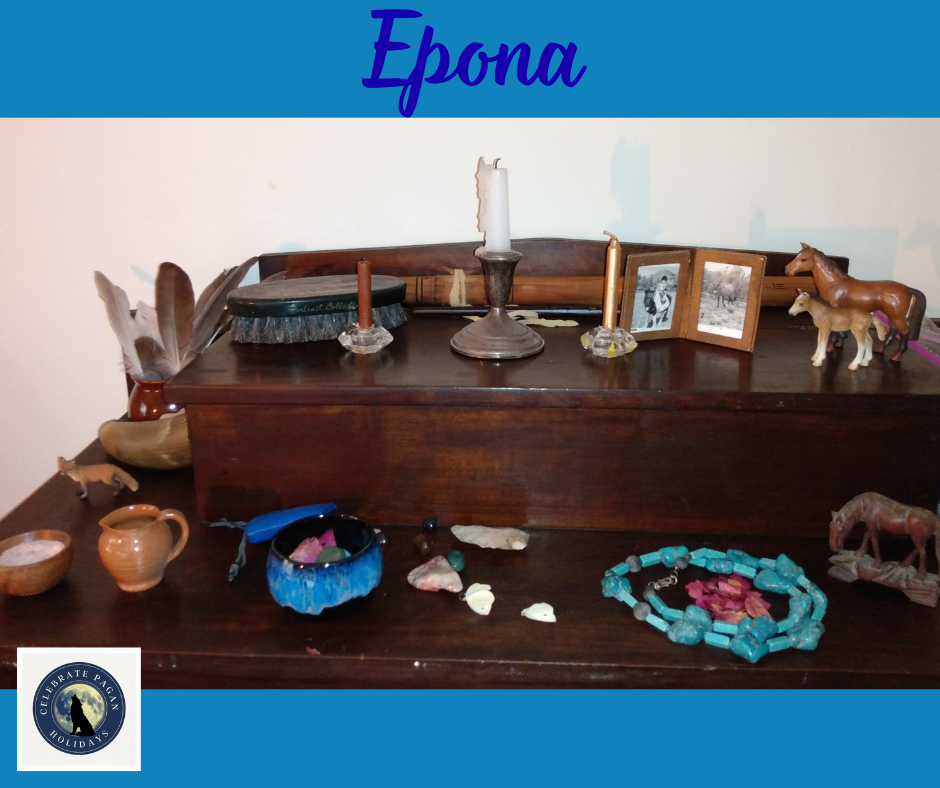
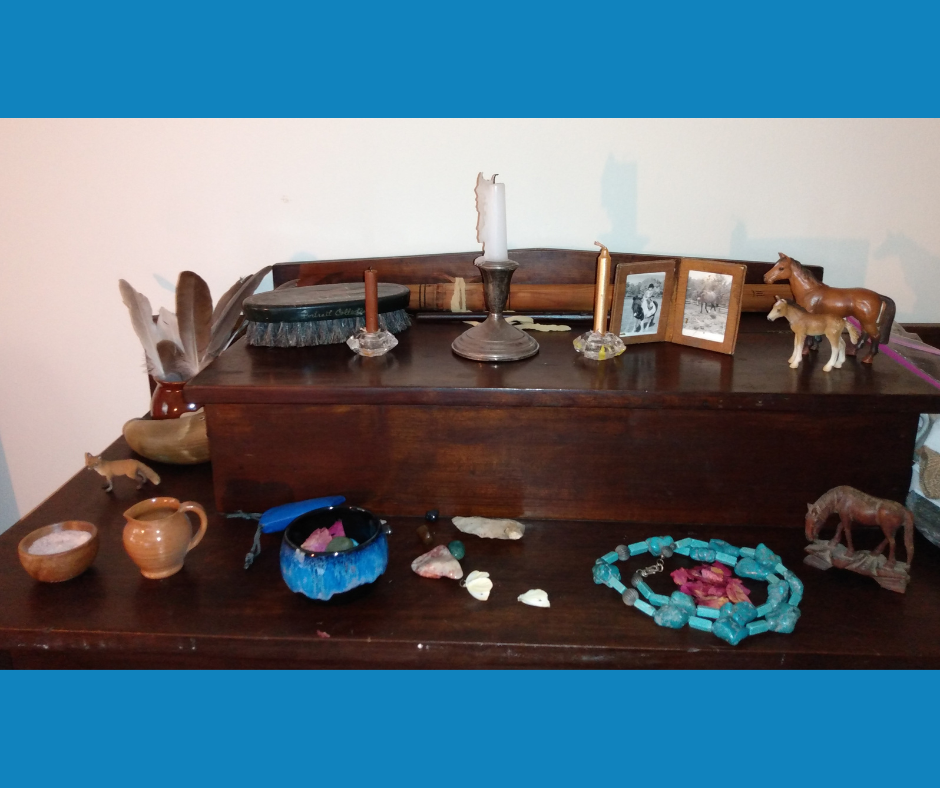
My altar for Epona the Celtic Horse Goddess
Common Types of Offerings
Food and Drink: Foods may represent the pagan path such as mead for Norse deities. Or homemade bread for the agricultural goddess Ceres. Common food and drinks include water, wine, honey, fresh fruit, beef, or a home-cooked meal. Beer and wine are popular offerings but nonalcoholic drinks work just as well.
Sensory Items: Lighting a colored beeswax candle, burning incense, offering specific herbs or flowers.
Intangible Acts: These are things you give of yourself. Recite a prayer or poem, sing or play a song, dance, or do a dedicated act of service such as volunteering at a women’s shelter or humane society.
Deity Correspondences: In all my god and goddess articles I list their correspondences. These are crystals, colors, animals, plants that the deity represents and work well as offerings and/or when setting up an altar.
Modern Offerings
You may be familiar with the term reconstructing. As pagans, we are reconstructing an ancient religion. We look at the ancients and see how they did things. We begin to build a foundation based on that but modeled to fit a modern world.
Most of us don't hunt or go find a sacrificial animal. So we adjust our religious life to the circumstances we live in and in modern times that mostly means purchasing food at a store. I now live in a more urban area to be closer to my children. And my practice has changed to fit that environment.
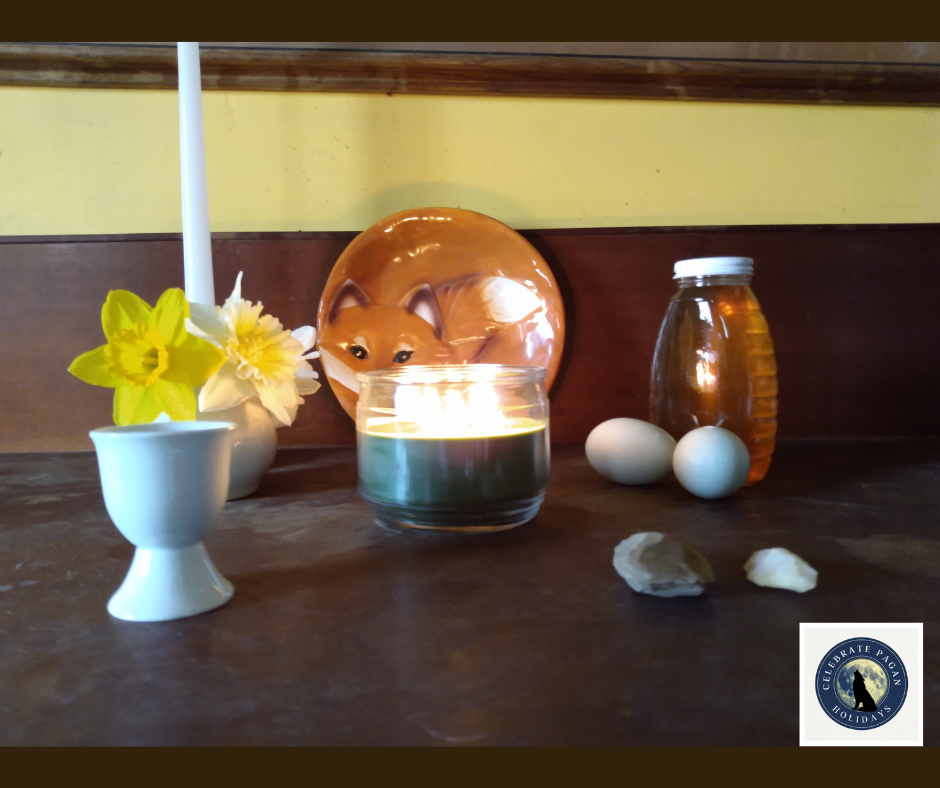
Many of our offerings will be made on our altars. Some like this one are quite simple, a springtime offering to the Earth Mother.
Know Your Gods and Goddesses
Learning about the deities is a big step towards knowing what offerings they may appreciate. CPH writer, Erik, went mountain climbing with friends and they dedicated the climb to Thor. Thor is a god who enjoys pushing his physical limits and contests. So this was an appropriate offering for him.
Some like my altar to Bastet are more complex and are part of a ritual. I used very specific items for honoring her including perfume, catmint, honey, turquoise, and candles in her colors. I chose these items based on what I know about her and my ongoing relationship with her.
Alternative Offerings
Offering can be words. Reading or reciting poetry for instance. Poetry is beloved by gods such as Odin, Apollo, and the muse Erato.
Creating works of art. Giving your self creatively is very appreciated by the deities.
You might dedicate a piece of jewelry to a god or goddess and wear it in their honor.
Giving of yourself and dedicating that time to a deity. This is also a great way to include your children and teach them about building community and service to the gods. You might dedicate service to the Abenaki god Gluskab who symbolizes kindness and taking care of people.
Or taking some time to just help out at an animal shelter. Many local shelters need people to walk dogs to give them some exercise and one-on-one attention. Dedicate this time to a deity such as the Egyptian God Anubis, the Greek goddess Hecate, or the Mesopotamian goddess Gula.
You may have a living connection. If you are making an offering to one of your ancestors a traditional family dish would be good.
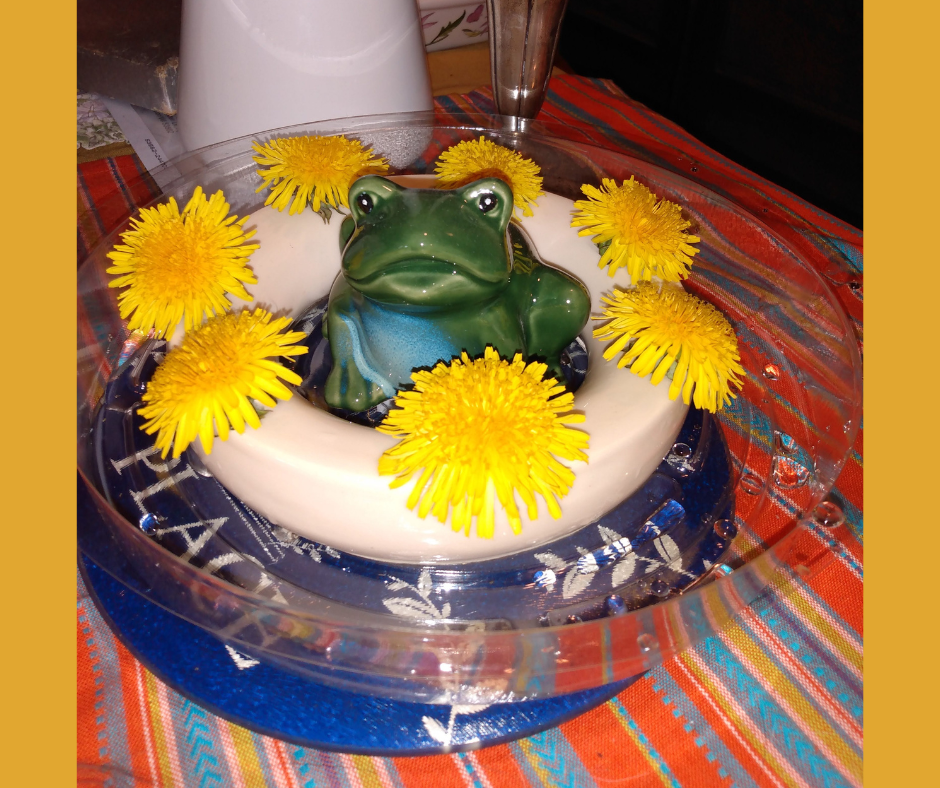
You can have fun with your offerings. This unique vase holds dandelions and I placed a frog in the middle and wala I have a perfect offering for the goddess Heget. Heget is the Egyptian deity of fertility and germination. I put this together and took a few minutes to acknowledge and thank her and to extend my gratitude to her with this offering.
Outdoor Offerings
So we've talked about making offerings on an indoor altar but obviously, as pagans, we desire to spend time in nature. You may have a dedicated outdoor altar or just make an offering when you are hiking or camping.
I have a fondness for the Celtic goddess Danu and will often bring something extra for her when I'm hiking near a creek. If you are putting something on or in the water make sure it is safe for the environment.
Offerings can cause pollution or be bad for native wildlife. We need to think about how we can dispose of offerings.
Explore specific examples of sustainable spiritual gifts that show respect for the environment. By choosing nature based offerings, you can strengthen your bond with the divine while protecting the earth you walk upon.
Eco-Friendly Outdoor Offerings
Getting out in nature is important to me spiritually as well as emotionally and I typically seek to strengthen my relationship with the gods when I am in the woods or down by the lake. However, I am also a science teacher and an environmental educator so it's highly important to me that I'm doing good and having a positive impact.
While bread is a common gift for the gods it is actually bad for wildlife. Ducks and geese in urban areas get a nutritional disease called "angel wing" because they get so much white bread fed to them. It also causes algae problems.
You may own your home and have a backyard where you can leave things. Remember those things should still be natural items or things that won't degrade or harm your wild friends.
Outdoor altars may be found in parks. We always want to use the hiking adage “pack in pack out” when using a public altar. You may feel you need to cleanse a public altar which is totally appropriate. I bring a small vial of moon water when I go hiking just for that purpose. Then I can set up the altar for my ritual and pack my items out when I'm done.
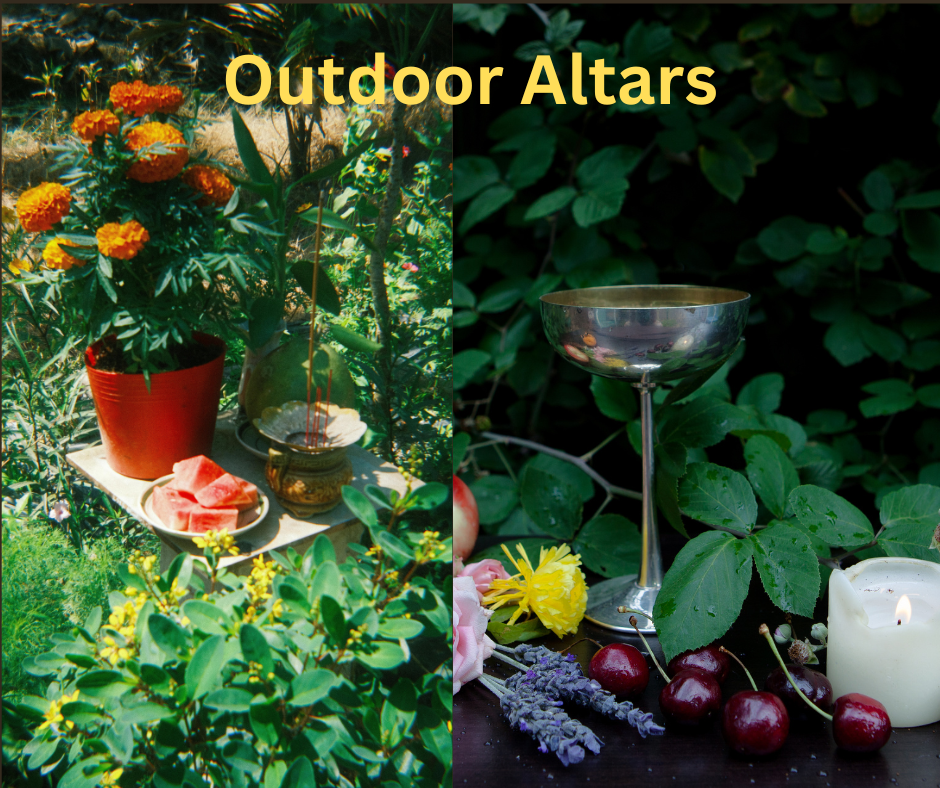
Eco Friendly Outdoor Altar Ideas
Do you have a portable altar that you take with you when you perform a ritual? That's fabulous. Just bring everything home when you are done. That way you can use it again, compost it, or dispose of it safely.
You might be like me and see a hollow tree and think FAIRIES! We all know fairies love shiny things. But they also love their trees and don't want them damaged. Stick with natural objects - a walnut, pinecone, or seashell - if you must leave them something. If you have a patio or balcony you can make a small fairy garden to show them you care.
Things to offer
Blessed water
A handful of birdseed
A few whole unsalted, uncooked nuts such as walnuts
A crystal or pretty stone
Family Offerings
I think picnics are a great way to have a communal meal with a deity, ancestor, or spirit guide. This is something I did when my children were young because it's a fun way to introduce them to making an offering and expressing gratitude to a deity of their choice. And a picnic basket is a great way to pack it out again!
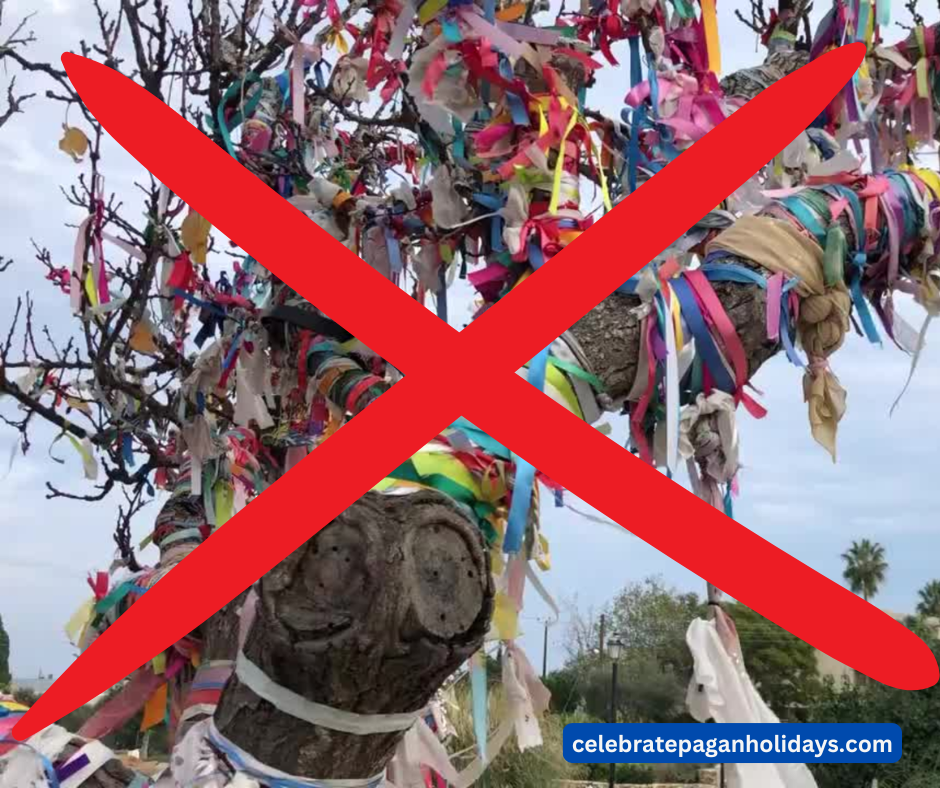
Wishing tree in Cyprus - an example of what NOT to do
What NOT To Offer Outdoors
The Wishing Tree above may be a bit of an exaggeration to my point which is be careful of the fabrics you leave out in nature. This tree and the wildlife it houses are not getting any benefit from all of those ribbons.
So I am the first to admit that since I have been a little girl I have often left a ribbon or piece of yarn in the trees as an offering to Mother Nature, Artio, or the Dryads. Especially if I was foraging I wanted to give thanks. In my mind these decomposed quickly.
However, I was very wrong. Fabrics today take a long time to decompose because they are mostly blends. Most ribbons and yarns will take 50 to 200 years to fully biodegrade. Although 100% cotton items will biodegrade much faster.
My work in wildlife conservation has taught me that leaving yarns or fabrics out for the birds is not appropriate. Don't leave things like dryer lint or human hair. All of these can tangle around the bird's feet and legs. If you are honoring Horus, Athena or Rhiannon show you honor them by building a birdhouse or planting bushes that provide berries for the birds.
Sometimes when we are doing a ritual or spell we are instructed to throw things in the water. Don't just don't. The water is our life blood. Don't throw coins, crystals, glass spells jars, or especially plastic bottles into the water. All of these can pollute or harm the ecosystem.
We may feel, well one coin or one trinket won't matter. But it does. We are so many people here on earth. These things add up.
Want to do something for your local wildlife? I have a book on building backyard habitat for your wildlife friends.
Do Don’t Tell
We often have a TELL mentality when communicating with the gods. I am going to … Remember they want to know that we are learning and acting on their guidance. I am a follower of Artio, the goddess of wildlife, and I want to do things that show her I am following her teachings. So Im volunteering in wildlife rehabilitation, building backyard habitats, and hanging bird feeders. I am doing eco-friendly things as part of my religious journey.
Think about the things that are important to you and the deities you feel connected with.
What God or goddess doesn't appreciate some wine or mead? Life is complicated. Our ancestors would have grown the grapes, stomped out the juice, and fermented it. Today we just go to the store and buy a bottle. But is it really that easy?
Support your local craft brewery or bourbon distillery. Buying locally supports the environment and your community. That shows the deities you care. My opinion!
What can you do? Many environmental groups have days where they pick up trash in public parks and along waterways. If joining a group is not your thing well simply bring a trash bag along when you go hiking and pick up trash that you see.
Do you need food for your next meal and maybe some spring berries for Brigid. When you purchase at the farmers market your food has not gone through processing or transportation. Hopefully, you can find organic farmers near you that seeks to care for the earth as they grow.
Disposing of Offerings
So what do you do with your food offering after your ritual? Well, first you can eat it. You partake in a meal with your chosen deity. If that makes you uncomfortable, simply compost uneaten food. That way you are part of the circle of life.
Salt and oils should not be composted or poured on the ground for that matter. Just dispose of them in the trash or put them back in the container.
Paper offerings, dried herbs, or written petitions can be safely burned in a fire-safe dish, cauldron, or outdoor grill.
Cleanse physical tools or statues, then reuse, altar-store, or repair them.
Money As A Offering
We may associate the word offering with money. If you grew up in a Christian denomination traditionally a receptacle is passed around the church during service to put money in. This money may support the church or one of its causes. The Bible specifically tells its followers to tithe part of their income.
Author, Ame, is the founder of CPH and an environmental educator. Learn more about us here.


Choosing the correct candle colors is essential in witchcraft. Candles are a standard tool used in rituals and spells.
Like all things in magic and witchcraft, the details matter. Everything has symbolism. Understanding color representation helps witches learn how to concentrate their own energy on a task.