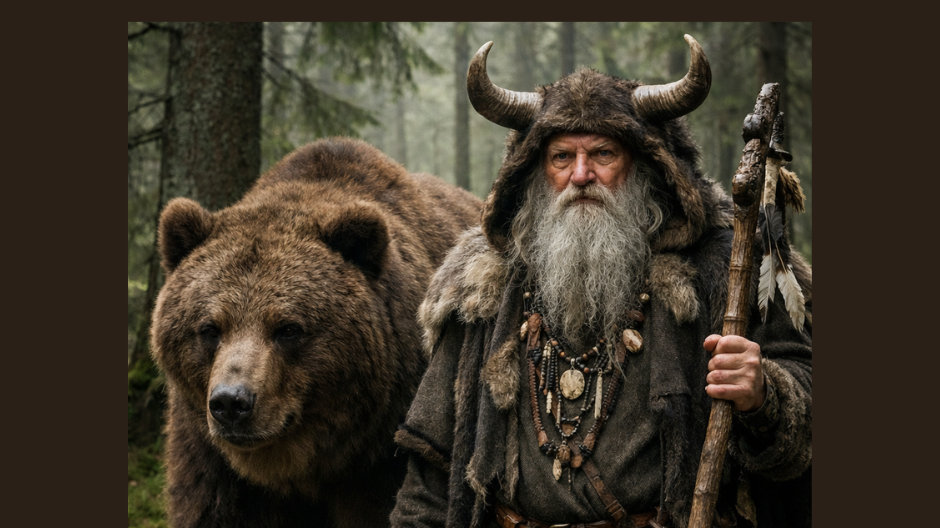
Veles is one of the most important deities in Slavic religion and a central figure in Rodnovery (Slavic Native Faith). He is a god of the underworld (Nav), earth, waters, cattle, wealth, poetry, and magic. Veles represents the wild, the unseen, and the forces that move beneath the surface of the world. He is both feared and respected, not as an evil figure, but as a powerful keeper of balance between life, death, and renewal.
Unlike sky gods who rule from above, Veles is a chthonic (underworld) deity. His power comes from the ground, the roots, the deep waters, and the realm of ancestors. He governs cycles: growth and decay, prosperity and loss, order and chaos. For modern pagans, Veles offers lessons about humility, adaptability, and respect for the natural and spiritual worlds.
In addition, he is associated with music, magic, and trickery. He is often described as having a dark, hairy, or wild appearance. He is often portrayed as an elderly man with a long grey beard, sometimes with bull horns on his head.
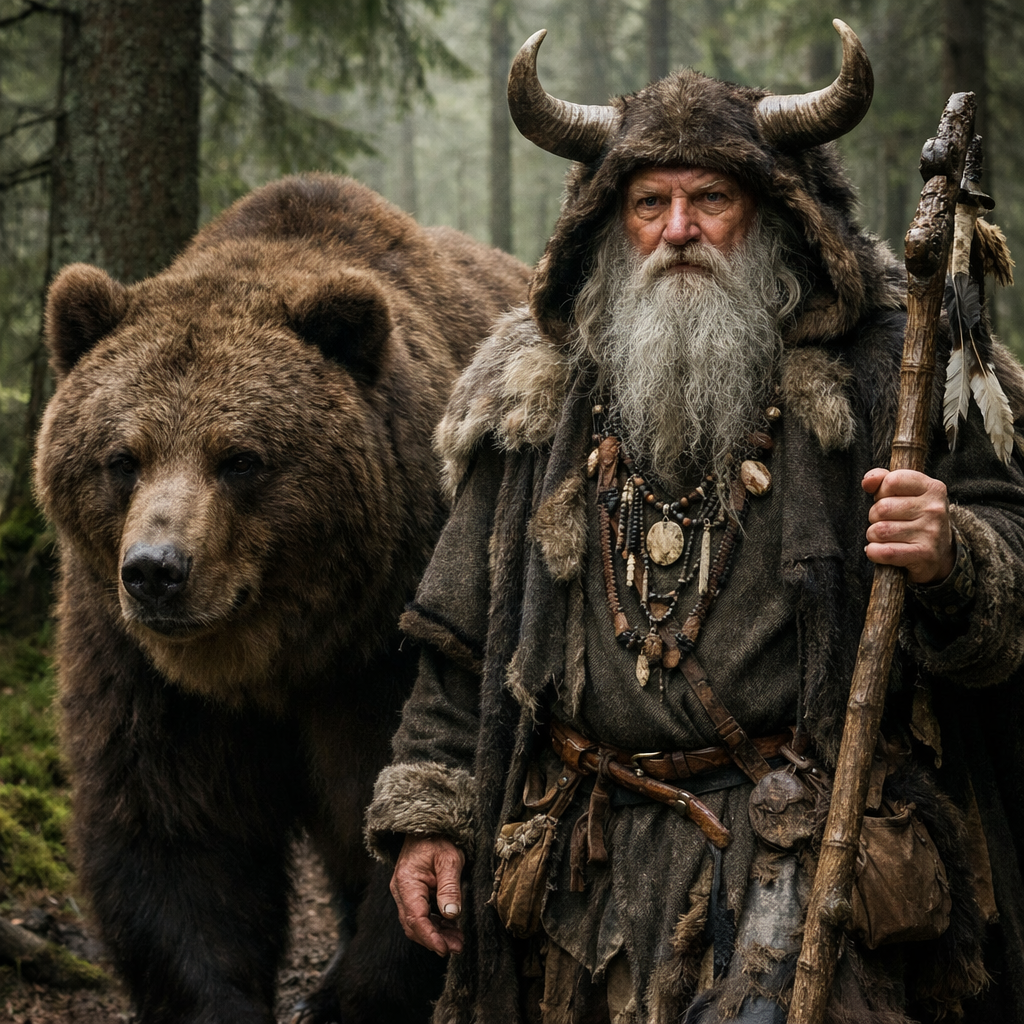
He is often portrayed as an elderly man with a long grey beard, sometimes with bull horns on his head. He can shapeshift into the form of a bear and the bear is his spirit animal.
Who is Veles?
Veles is one of the most important deities in Rodnovery culture. He is the epithet of the Horned God as he was the protector of the cattle. As such, he was imagined as an old shepherd, or in animal form as a bear.
Correspondences
Symbols: Wealth, fertility, magic, deception, wisdom, death, rebirth
Culture: Slavic, Rodnovery
Abode: Navia (underworld), earth, waters
Color: Black, brown, deep green, dark blue
Divination: Clairvoyance, shapeshifting
Elements: Earth and water
Animals: Cattle, snakes, dragons, wolves, bears
Plants: Willow, oak roots, mosses, grasses, fungi
Planet:
Crystals: Obsidian, Jet, Onyx, Garnet, and Jasper
Wood: Forests, wetlands, riverbanks, caves, crossroads
Tools: Horns, staffs, coins, ropes, skulls, masks
Consort: Mokosh, Devana
Deities: Hades, Hermes, Loki, Odin
Eternal Rivalry Between Veles And Perun
Veles appears in early Slavic mythology as a rival to the thunder god Perun. Perun rules the sky, storms, and law. Veles rules the earth, the waters, and the underworld. Their conflict represents the tension between order and chaos, sky and land, authority and cunning. In many myths, Veles steals cattle, wealth, or even Perun’s wife, Mokosh, or son.
The depiction of the eternal battle between them is that Veles, in the form of a serpent, slithers his way from the caves of the underworld in the roots of the world tree, and coils upwards to the treetop, which is in the heavenly realm. Perun responds by striking Veles with lightning. Veles escapes by changing shape—into a serpent, dragon, bear, or even mist—and fleeing into rivers, forests, or underground. When Perun finally strikes him down, rain falls, fertilizing the land. Veles then returns, reborn, and the cycle begins again.
As the two main deities, oaths and promises are sworn in the name of Perun or Veles. When you want to give your word to someone, make a promise, you mention their name and that makes the oath or promise have greater weight.
Perun would punish you if you break the oath with death in battle, and Veles would punish you with a disease.
His tree is the willow tree, whose branches are long like snakes.
As the God of magic and trickery, he is compared to Loki or Hermes. His magic aspect is an inspiration to Volhvs the Rodnovery priests. Their name is derived from the name of the deity himself.
Ruler Of The Nav, The Underworld
Veles is the ruler of Navia (Nav), one of the three realities that Rodnovery acknowledges, is the realm of the dead, and the world of spirits. It is often described as a dark, watery place or a green pasture where souls go after death.
Veles rules this realm as a guardian and guide, not a judge.
Navia is the Slavic realm of the dead and ancestors. It is not a place of punishment but a necessary part of the cosmic cycle. He oversees the boundary between the living and the dead, ensuring that souls move where they need to go.
As a god of Navia, Veles is deeply connected to ancestors. He governs memory, lineage, and the wisdom of those who came before. This makes him especially important in Rodnovery, which places strong emphasis on honoring ancestors and maintaining cultural continuity.
Veles’ underworld role also ties him to decay and transformation. Death feeds life. Fallen leaves become soil. Bodies return to the earth. Veles reminds us that endings are not failures but transitions.
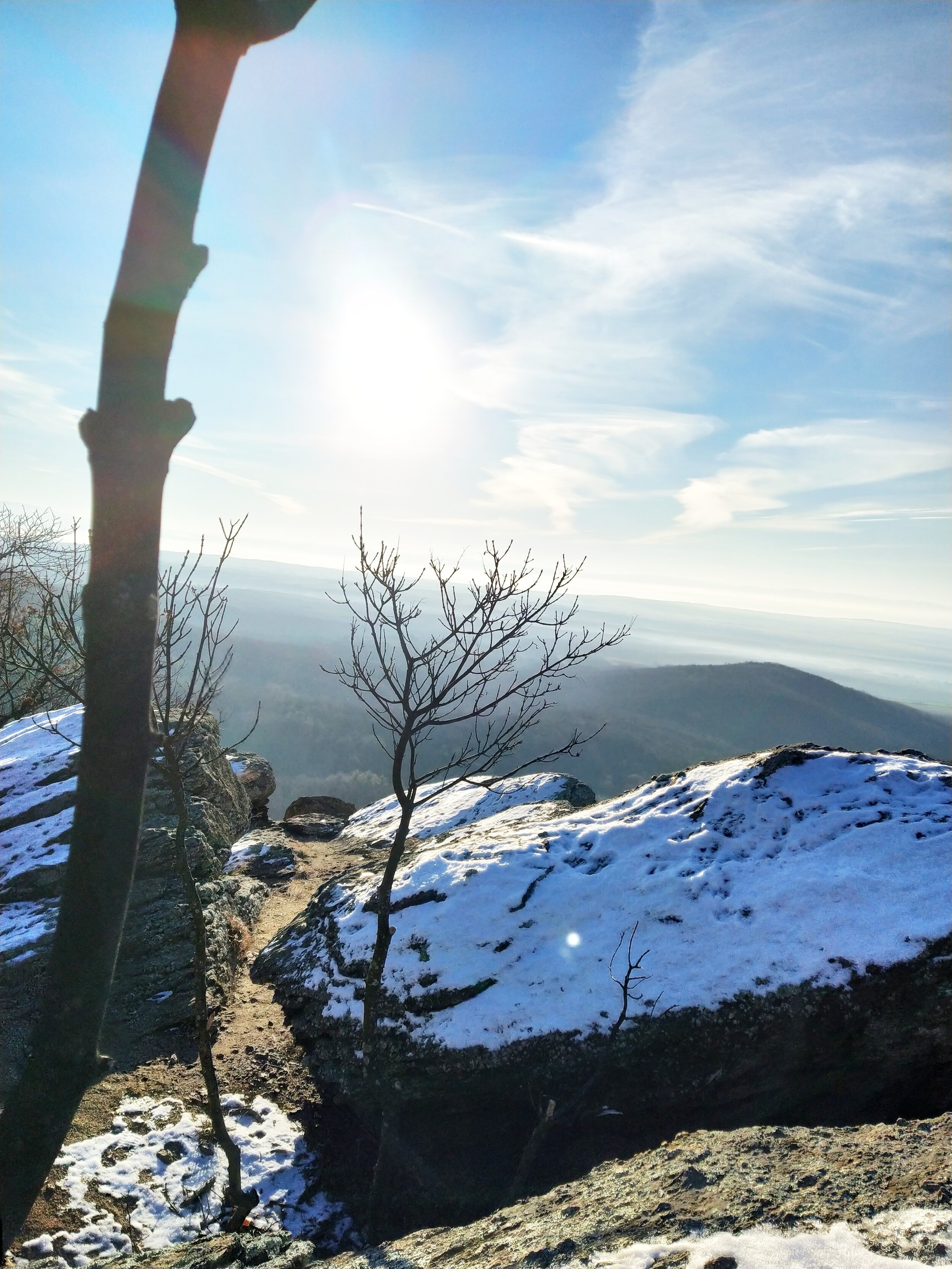
Marko lives in Eastern Europe. This picture is from a hike to celebrate Veles. Photo by Author, Marko.
Veles The Protector
Veles is an earth god in the truest sense. He rules forests, wetlands, rivers, swamps, and fields. These are places that are fertile but unpredictable. Unlike the clean lines of farms and cities, Veles’ domains are messy, alive, and constantly changing.
Water is especially important in his symbolism. Rivers, springs, and marshes were seen as gateways between worlds. Veles moves freely through these spaces, carrying knowledge between Navia and the world of the living. This connection makes him a god of liminality—of thresholds and crossings.
Wild animals also fall under his care, especially cattle, snakes, wolves, and bears. Cattle represent wealth and survival. Snakes and dragons represent the underworld and hidden knowledge. Bears represent strength and the forest’s authority. Through these animals, Veles teaches respect for both domestic and wild life.
Veles was imagined as a bear, which Slavic people considered the Lord of the Forests who took care of animals, forest flora, and the forest itself. He was the protector of all the animals dwelling in these beautiful parts of nature. Read my article Bear Spirit Animal or watch the video below.
As the protector of farmers and livestock, the cult of this deity is widespread in the Rodnovery world. Most of our ancestors were farmers and they often prayed and worshiped Veles for good favor in all their work.
Bears are symbols of strength, power, and courage. They often come to us when we lack confidence. check out my video on the bear spirit guide.
Veles and Magic
Veles is one of the primary gods of magic in Slavic tradition. His magic is practical, rooted in survival, healing, curses, poetry, and transformation. He is associated with shapeshifting, illusion, and trickery, but not in a frivolous way. His cleverness is a tool for navigating hardship.
He is also linked to music, storytelling, and poetry. Words have power, and Veles governs spoken magic, songs, and charms. Bards, musicians, and storytellers were believed to be under his protection. Through chanting shamans and magicians can enter trance-like states, facilitating travel between the worlds of the living, dead, and divine to gain foresight.
This makes Veles a god of knowledge that is earned through experience rather than authority. He favors those who observe carefully, adapt quickly, and respect the unseen forces of the world. The Slavic word for sorcerer or magician, volkhv, comes from Veles.
Crystals
If you enjoy using crystals in your magical practice these align well with Veles
Obsidian: Reflects his chthonic (underworld) nature and association with deep magic and protection.
Jet: Associated with grounding, protection, and the dark, watery, or underground realms.
Onyx: Aligns with his role as a strong, earthy deity, often in the color black.
Garnet: Represents his aspect of wealth and power.
Bloodstone: Connected to his role as a protector of animals and nature.
Jasper: Generally associated with earth energy.
Connection With Other Deities
Due to his association with wisdom, magic, and poetry, Veles is sometimes equated with the Norse god Odin.
In his role as a trickster god, he is in some ways similar to both Greek Hermes and Norse Loki.

Cold weather doesn’t stop Guest Author, Marko, from connecting with nature! Photo by author.
Veles in Daily Life and Ethics
Veles is not a distant god. He is part of daily life—watching over herds, trade, and oaths. For modern pagans, he encourages practical spirituality. Honor your work. Keep your word. Respect the land that feeds you.
He also teaches adaptability. Life does not always follow rules. Sometimes survival requires creativity and bending expectations. Veles is a reminder that intelligence and flexibility are strengths, not flaws.
At the same time, Veles punishes greed and broken promises. Wealth gained dishonestly invites loss. Magic used carelessly brings consequences. Balance is central to his worldview.
How Is Veles Celebrated Today?
Veles is celebrated by Rodnovery Pagans on the 11th of February. During this day the prayers are offered to Veles for the protection of livestock. To win his favor and your kin to be healthier you offer milk as a sacrifice to him.
On this day it’s strictly forbidden to eat veal or beef, especially near the place of worship. The main dish eaten during this day is groats or other similar grains. In bigger Rodnovery communities the celebrations are often accompanied by the organization of ritual fights.
Farmers also have a tradition that is connected to Veles. You would leave the last wheat that wasn’t reaped and keep it in your barn tied together, making a beard shape, like the bearded God. Seeds from this were used as the first seeds planted in the next year, or are also used to make flour for the sacred bread for the celebration of Veles.
Because he is the ruler of the Underworld as well, it’s believed that he can connect us to our deceased ancestors and loved ones that passed away during his day. Sometimes, Rodnovery followers visit the graves of their relatives and honor them, as well as Veles, to get a deeper connection.
Read more about Rodnovery Practices in our blog.

Veles, Andrey Shishkin, 2014
How Am I Connected To Veles? (Marko)
Veles is one of the deities I have a greater connection with. I am a pagan that loves the forests and animals, and Veles being the deity of both, was an obvious God I would more likely connect with. I spend a lot of my free time in forests, hiking in the beautiful nature of the place I live, and connecting with him as much as I can.
The thing that makes the most connection is my enormous love for animals, whose protector he is. I chose to be vegan and eat plant-based for most of the time because of it. I have a lot of animals in my family and a lot of pets in my household that I take care of.
Since I officially became a Rodnovery, I acquired a serpent, a snake as a pet, in honor of Veles, and he is my best connection point for around 7 years now.
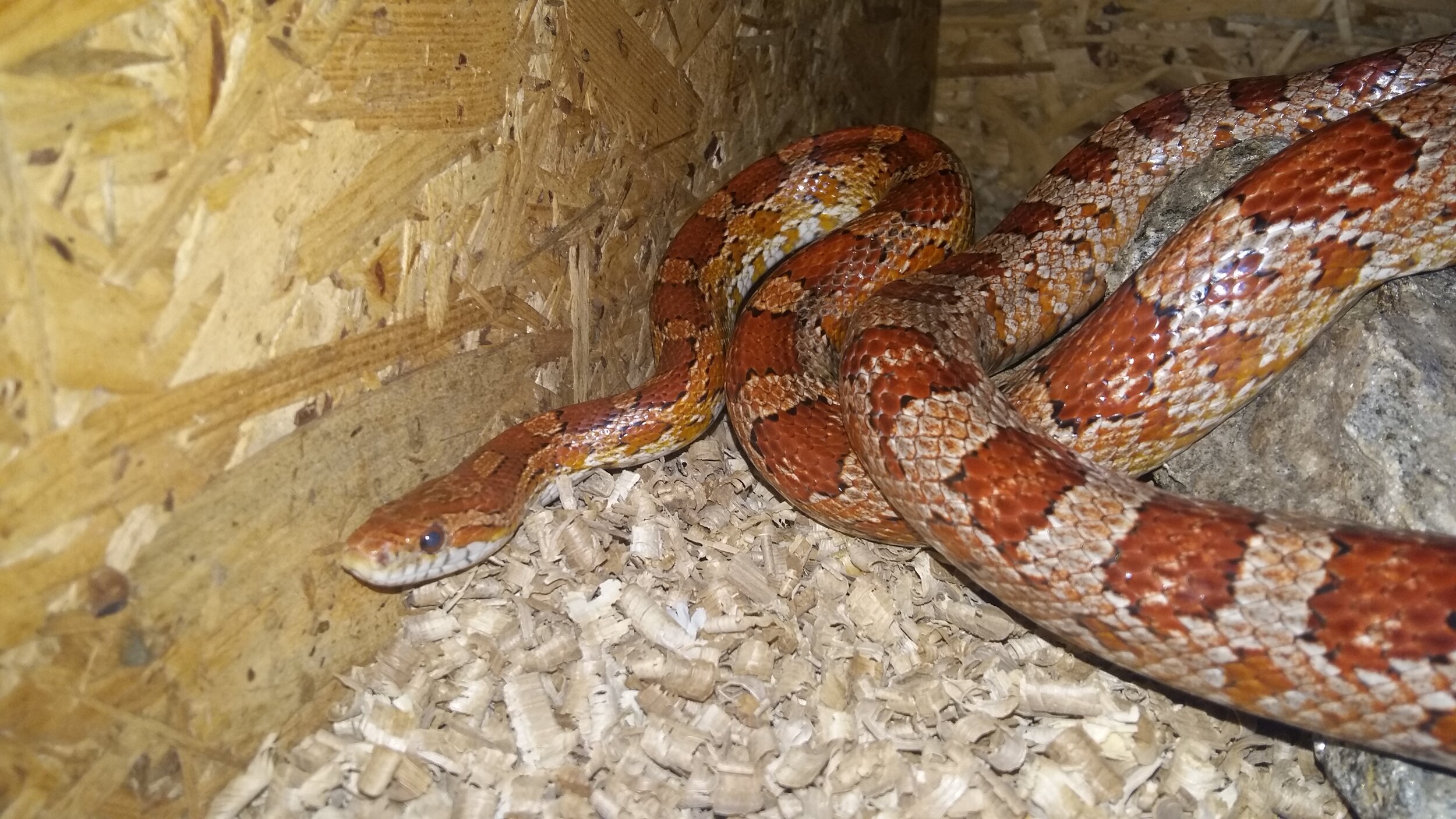
Marko’s pet corn snake. Photo by author.
If you would like to learn more about corn snakes check out this article.
How Do I Celebrate the Holiday? (Marko)
As this is one of the most important days for me, I take the whole day off to dedicate it solely to Veles. The day starts with waking up before sunrise to have the opportunity to watch it and soak in the first sunlight as a blessing.
In the first part of the day, I love to go on a hike in the forest, to enjoy the charms of winter in the mesmerizing beauty of the nature that I live near. There is also a small farm in the forest that I visit where I offer my help in feeding the animals or replenishing the wildlife feeders around it, for deer and boars that struggle to find food in the winter.
In the second part of the day, I spend at home, with my loved pets, and tending to their needs while worshiping Veles in unique ways as a solitary practitioner. My sacrificial milk that is offered to Veles is always lactose-free so I can give it to my cats that enjoy it. The beef I don’t, and cannot, eat on this day goes to my dogs in a specially prepared meal. Also, I make a feast for myself and my family and sacrificial bread is a must accompanied by a dessert made with groats!
At the end of the day, I spend time with my snake, connecting with Veles the most. This day is one of the exceptions during the year that I offer live sacrifice to Veles. Snakes are predators, and I dedicate a live mouse for my serpent to have for his meal on this day, allowing him to hunt and be more connected to his natural urges.
This year I also found time to go to the graveyard to visit my late uncle, as he passed away from coronavirus not long before the day of Veles. I used the deity, being the ruler of the underworld, to connect with my uncle and praise him.
Connect With Bear
Connect with bears with this fabulous coloring book. Proceeds go to wildlife rehabilitators!
Honoring Veles in Modern Rodnovery
Modern pagans can honor Veles in ways that are meaningful, respectful, and grounded.
Altars and Sacred Space
An altar to Veles is often placed low to the ground, reflecting his chthonic nature. Natural materials work best. Stones, wood, bones, antlers, and river water are appropriate. Avoid overly ornate setups. Veles values function and authenticity.
Offerings
Traditional offerings include bread, grains, milk, honey, mead, beer, and coins. Pouring libations onto the earth or into water is common. Offerings should be given with intention and gratitude, not as bribes.
Ancestor Work
Honoring ancestors is one of the strongest ways to connect with Veles. This can include lighting candles for the dead, telling family stories, cleaning graves, or maintaining an ancestor shrine. Veles supports remembrance and continuity.
Nature-Based Devotion
Spend time in forests, wetlands, or near water. Clean up litter. Respect wildlife. Learn the land where you live. These acts honor Veles more than elaborate rituals.
Music, Poetry, and Story
Writing, singing, drumming, or storytelling can be devotional acts. Speak truth. Tell stories that carry wisdom. Veles listens to words shaped with care.
Seasonal Observances
Veles is often honored during colder months, especially late autumn and winter, when the veil between worlds is thinner.
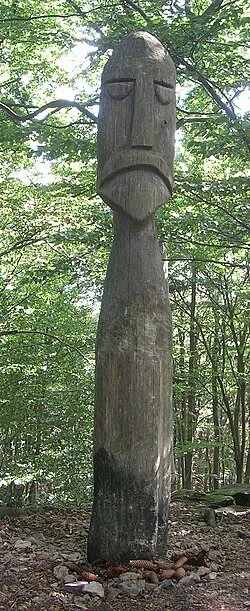
Veles
A modern statue of Veles on Velíz mountain, Czech Republic
Photo credit: ŠJů
Veles Family
Veles is most commonly associated with the goddess Mokosh (or Mokoš) as his primary consort, particularly in stories where she is abducted from his rival, Perun.
Other traditions or interpretations identify his wife as Devana the goddess of the hunt and forests. Together, they represent a union of wild nature, with Devana often described as a fiercely independent, youthful woman, portrayed as a "Mother of the forest". She is sometimes considered the daughter of Perun and Mokosh, forced into marriage with Veles as a consequence of her rebelliousness. She is also associated with the spring ritual of "vrbopuc".
Places Honoring Veles
With Christianization, Veles was demonized or transformed into folk figures such as devils, forest spirits, or dragons. Despite this, his presence survived in folklore, place names, and rural traditions tied to herding, music, and magic.
Not many things survived Christianization, but we can find a lot of places in the Ronovery realms that still bear the name of Veles or the derivatives of his name. After the advent of Christianity, Veles was split into several different characters. As a god of the underworld and dragons, he became identified with the Devil. His more benevolent sides was associated with Saint Blaise the patron of shepherds, or Saint Nicholas, that is the giver of wealth and sort of a trickster.
Mainly in Southern realms where Slavic people live, where I also live, we can find a lot of toponyms where Veles appears. The best-known one is the city named Veles in Northern Macedonia. In Bosnia and Herzegovina, there is a mountain named Velezh. In Serbia there is a village named Velesnica, in Montenegro there is Velestovo and in Croatia there is Volosko.
One of the unusual places where his name is also found in the Greek city of Volos, and this gives us evidence that Ronovery was present in Greece in the past as well.
Take Away
This was only a grasp of the greatness surrounding Veles. I hope you can get the feel of the greatness and somewhat uniqueness of the Rodnovery pantheon! May Veles bring you good fortune!
Guest Author, Marko, wrote the original article and gives his experience. He is a young pagan from Southeastern Europe, specializing his pagan path in his Native Faith called Rodnovery and dwelling into Wiccan solitary practices. Years of research and practice, from a very young age when curiosity blooms, gave Marko a good level of expertise on the topic of the Rodnovery religion.
Author, Erik Olsen, updated this article 2/4/2026. Erik desires to be a Viking when he grows up and has worked in Outdoor Adventure leading hikes and rafting trips in addition to being an Assistant Museum Curator. He is the author of our Norse beginner guide “Complete Guide To Become A Norse Pagan”

Rodnovery, also known as Slavic Native Faith, is one of the lesser-known modern pagan religions. It is a modern revival of the pre-Christian Slavic polytheistic religion and is now considered a new religious movement.