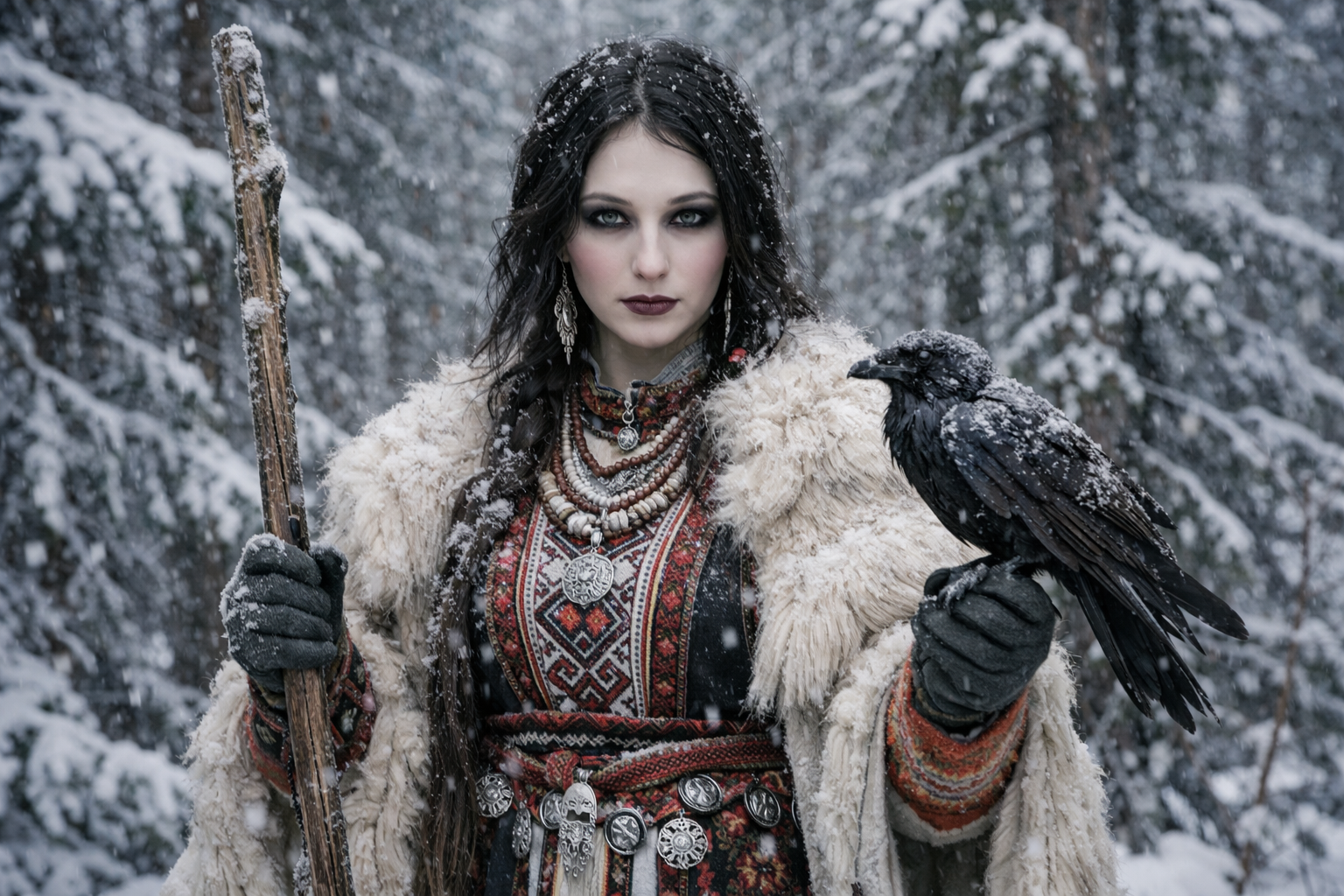
Morana (Mara, Marzanna, Mora, Mare) is one of the Major Rodnovery deities. The Slavic Goddess of winter and darkness is associated with seasonal rites based on the death and rebirth of nature.
As the Goddess associated with winter’s death, rebirth, and dreams, her death marks the end of Winter and the birth of Lada and Vesna, the deities of Spring.
Morana is imagined as a cold and long winter, a type of winter that could bring with it hunger and extreme cold. It could be the cause of disease and the death of livestock. Because of these attributes, her arrival wasn’t celebrated with joy as other holidays, but her departure was.
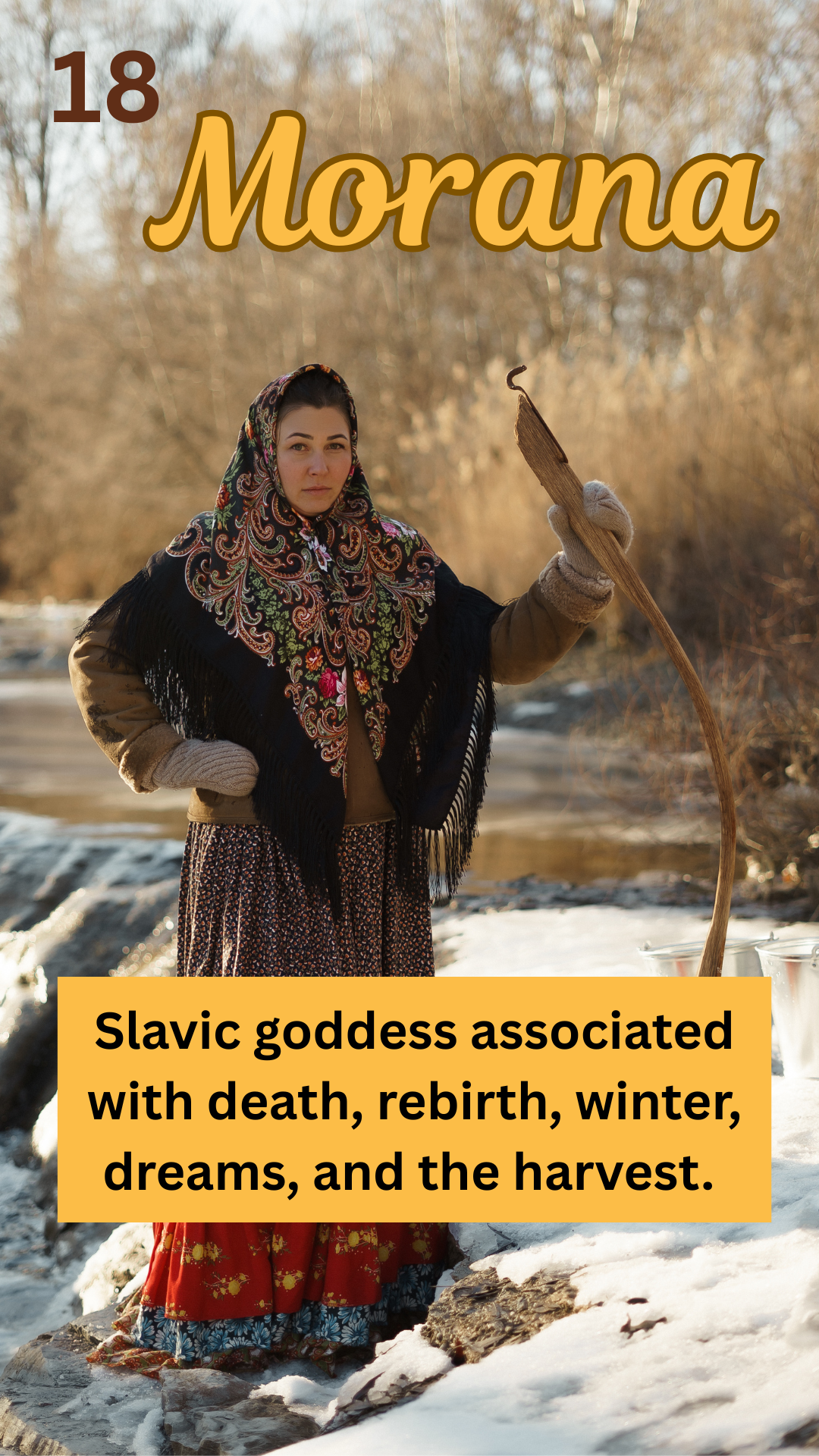
Morana
Domains: Winter, death, nightmares (as Mora), pestilence, dreams, and the cycle of nature.
Who Is Morana?
In the Rodnovery Pantheon, there were not many relationships between deities that gave us new ones, like in the Greek Pantheon where Zeus had many children that became Gods themselves.
The deities in Rodnovery are the manifestation of the primordial God with freedom and spontaneous will to life and co-creation. Although Morana is viewed as the daughter of Mokosh, she's sometimes portrayed as the daughter of Lada and Svarog.
Morana’s Roman equivalent would be Morta and her Greek Hecate. For Celts, she would compare to Cailleach.
Her looks reflect her duo nature and vary from a beautiful, pale maiden with dark hair and fangs to an old hag, often with a sickle or scythe.

Effigy of Morana, Goddess of Death. Czech Republic. Photo by Matěj Baťha The eggs around her neck symbolize the cycle of death and rebirth, fertility, and the end of winter, her effigy is often decorated with eggshells as part of rituals to welcome spring and banish winter's harshness.
What Is Rodnovery Yin Yang?
Morana, the Goddess of death itself, is a great example to explain a concept in the religion of Rodnovery that is similar to Yin Yang. As you can see, Morana, a seemingly cold and bad deity, is equally celebrated and has her own holiday as any other deity in the pantheon. Why is that?
You must have heard of the saying “There is good in every evil, and there is evil in every good. There is light in everything dark, and there is dark in everything light.”
In correspondence with this, in Rodnovery we have a similar concept.
Everything, both being good or bad, is celebrated equally.
Equality is a very important concept in our religion. A simple example to explain it involves Morana herself.
You need her blessed favor during the growling days of the coldness of winter in order to survive it, if she favors you, your loss, if any, will be minimal. Same as you would honor her counterpart, the Goddess of Spring, Vesna, for favor going into the better and warmer days of the year.
How Was Morana Depicted?
As you may have seen in previous articles about Rodnovery, deities in our pantheon often have different depictions based on what they represent. This tradition didn’t avoid Morana, as she has two depictions in folklore.
The first depiction we see is of a young pale beautiful woman with a very cold breath. She would wander the Yav spreading cold and winter, her look and breath can freeze anything. She is carrying a scythe of some kind with whom she takes lives during the harsh winter.
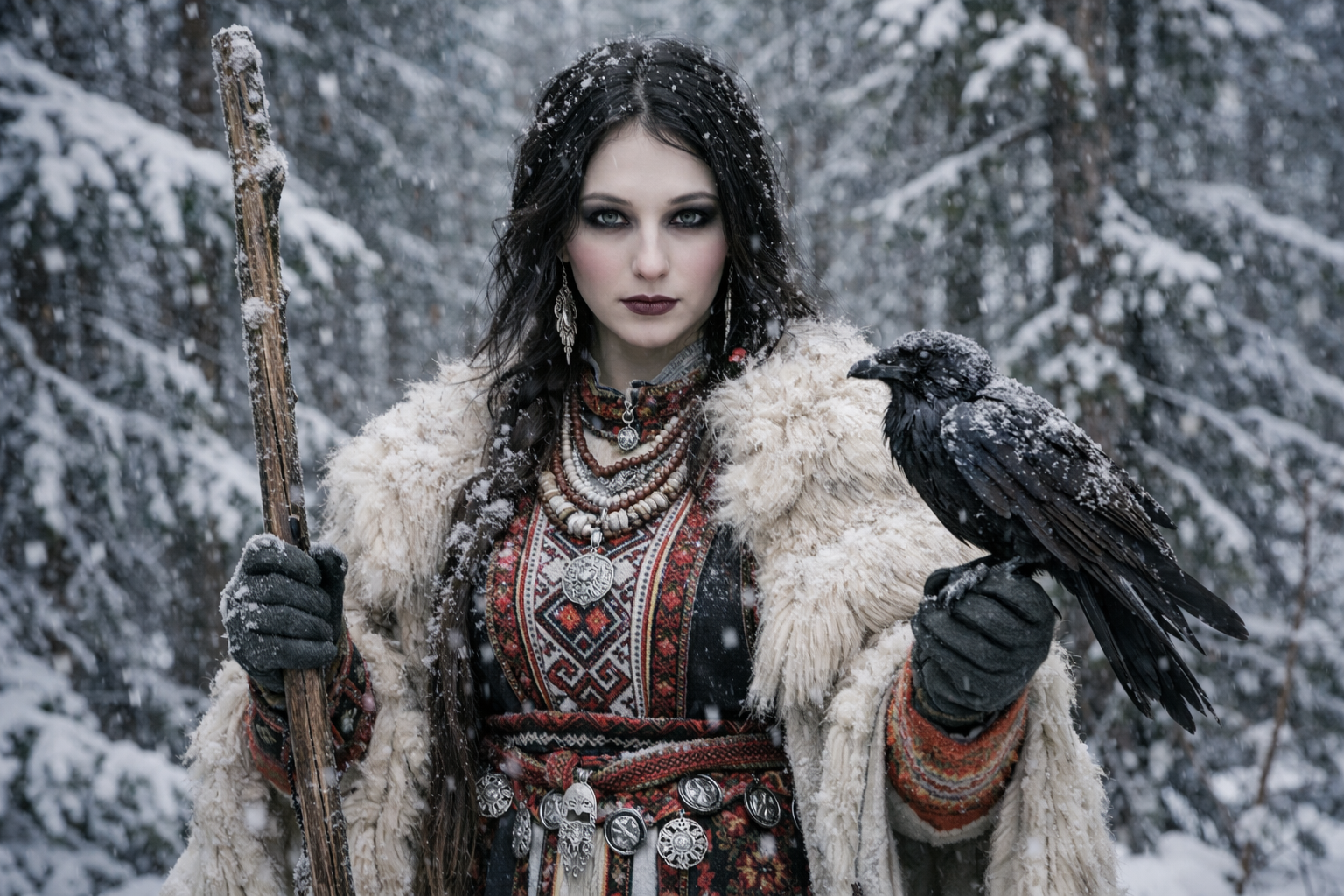
One of Morana’s spirit animals is the crow.
The second depiction we see is of an old ugly lady with black hair that is scary looking. She would wander the night and take lives away from people in the cold.
Often men would hold ritual walks around the house or settlement and sing really loud so the noise drives her away, while women would leave dishes around the house at night so if she comes into a home, they will be alerted.
Women also pray to her not to take their children away.
Morana And Dreams
Morana is associated with dreams. She is the deity that influences our dreams, especially in a bad way. I am sure everyone is familiar with the concept of a nightmare.
Her second depiction would take the form of a demonic being called Mora and come into our dreams and influence them to go bad. Many rites were held in households when someone had nightmares to prevent her from coming.
As a matter of fact, ‘nightmare’ in my language is called “Noćna Mora”, which literally means Mora of the Night.
One of the connections I saw with the English language while writing this article is that I also see Morana in the English word for it. One of the names of this deity is Mora or Mare, and the word nightMARE is tied to bad dreams. Weird, isn’t it?
Morana And Spirit Animals
Morana has an affinity for pure black or white animals. Her sacred and associated animals include:
Cats Pure-white or pure-black cats.
Swans Often black, sometimes white, swans.
Hares Sometimes white hares.
Dogs Black dogs.
Crows Black crows (but generally not ravens) Read my article on crows and ravens to learn 5 Ways Corvids Communicate with us
Tradition Of Celebrating Morana
One of the main traditions that are tied to the celebration of this deity in Rodnovery is burning or drowning an effigy of Morana to celebrate the end of winter. This is usually done at the end of winter, in March.
Rites of burning involves the preparation of an effigy in female clothing and setting it on fire outside. This is performed mostly by children with the supervision of adults, as in the past children were more likely to die during harsh winters.
The effigy ranged from doll size to a life-size dummy. The ritual of burning represents the end of the dark days and the welcoming of the rebirth of Spring.

Marzanna dolls are thrown into the Brynica; Miasteczko Śląskie Photo by Marta Malina Moraczewska
Rite of drowning the effigy of Morana was focused around insurance of a good harvest in the upcoming year. As a deity of death, together with a deity of waters called Vodan, she was believed to lure people in waters and drown them, and by drowning the effigy you would remove any results of her presence.
In my part of the Slavic domain, Morana is celebrated on the 17th and 18th of January, as well as ritual burning or drowning of an effigy. People would decorate it and then perform the ritual. One of the texts that survived over the generations states:
“We place this wreath on you while we release you to the river,
May you flow in it far away from us this winter,
Flow far, flow to the Sea,
And when you get to the Sea,
Stay there until next Winter”
Check out our resources
How Do I Celebrate Morana? (Marko)
As per usual with all the Rodnovery holidays, I wake up really early, before the sun even rises, to catch the glimpse of the first rays as blessings. As you saw in this article, even if she had bad attributes, she is still, like everything, a projection of the primordial power of the Universe, so I do feel blessed.
As a solitary practitioner, I have the power to decide how I am going to honor Morana on this day. Winters in my parts of Europe can be harsh, but in recent years they haven't been. Maybe Morana stayed at the seaside where people send her during drowning rituals when she is released in the rivers.
As mid-January is a more peaceful part of the year here, I do not hustle to drive to natural waters near me, rather I practice the ritual burning of the effigy. I am not so good with making it, so I only use dried-up straws and grass and try to shape them in a human-like form using a rope.
Usually, it doesn’t look anything like it is imagined, but the intention is all that counts. Then, on this day I proceed to spare a few blessings for Morana to have her favor during the winter after which I burn the effigy in my home's fireplace.
For me, personally, Morana also had one very good blessing that she gave me. My younger sister was born on the 18th of January, on her day. It’s said in the tradition, whoever gets sick on this day ends up losing his life to Morana - and yet, Morana granted new life in my family.
Take Away
Channel your thoughts towards the idea of the good in all evil, and evil in all good. We need blessings of both for our survival in this realm, this lifetime, this world, whatever your beliefs are. “Blessed be, and Slava Rodu!” - Marko
Author, Marko, is from Southeastern Europe, specializing his pagan path in his Native Slavic Faith called Rodnovery and dwelling into Wiccan solitary practices. Years of research and practice, from a very young age when curiosity blooms, gives Marko a good level of expertise on the topic of the Rodnovery religion.
Author, Updated by Erik Olsen, January 2026


Animal totems and spirit guides were common among many pagan groups including the Native Slavic Faith.
Some Gods in the Rodnovery pantheon had really strong connections with certain animals. To some extent, they were even shapeshifters who came to our realm of living in the form of animals or animal spirits to interact with humans.