

The Elder Month marks the final turn of the Celtic tree calendar, a time when the natural world slides into winter rest inviting us to reflect, release, and prepare for spiritual renewal. In ancient Britain, the elder tree honored during this period was Sambucus nigra, a familiar hedgerow species with deep roots (literally) in folklore and magic. Today, many modern pagans and witches in North America work with Sambucus canadensis, the American elder, which carries similar medicinal and symbolic qualities.
The weeks spanning November 24 to December 23 are naturally introspective. Days are short, wildlife has settled into winter rhythms, and we turn inward to home and spiritual reflection. Elder energy fits this moment perfectly—quiet, protective, wise, and deeply tied to the cycles of death and rebirth.
Elder teaches balance: endings that make space for new growth, protection that allows rest, and wisdom that emerges from being reflective.
This article will look at ways we can celebrate, deities for the month, and magic. We also look at the Elder plant and its benefits.
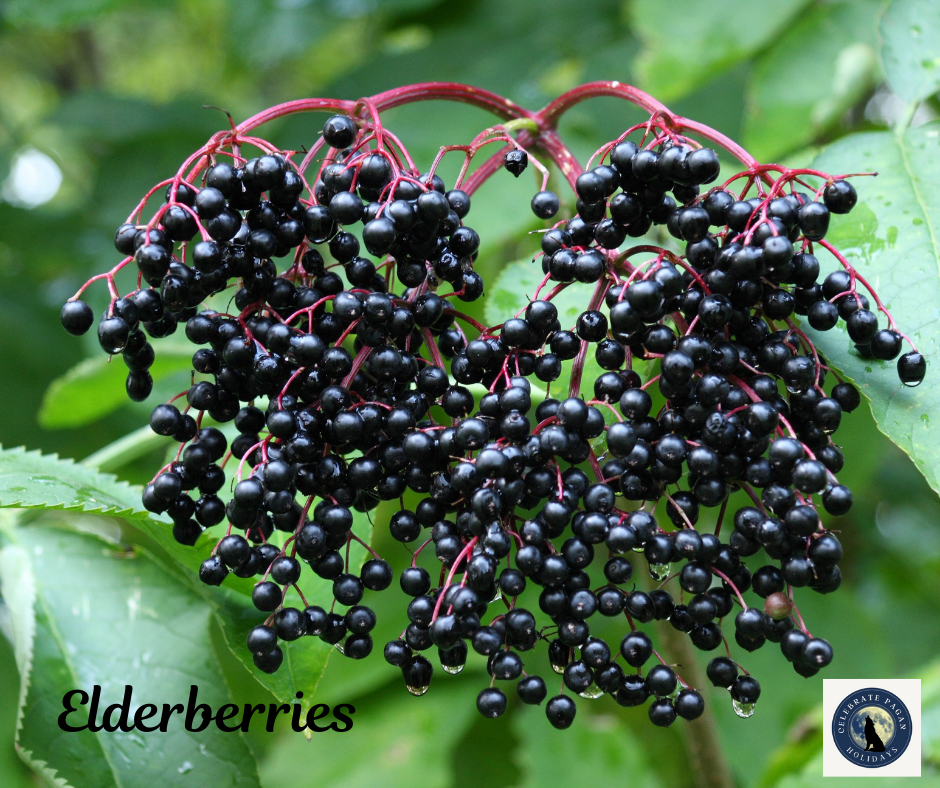
Elderberries are the fruit. The are quite easy to grow. There are several domestic cultivars that produce larger fruits and have high levels of Vitamin C. Great for pies and jelly. They are also a great backyard plant for wildlife.
The Elderberry
Both elderberry and elderflower come from the same plant, commonly called Elder or the Sambucus genus. There are 30 species widespread around the world.
Sambucus nigra (European elder) is native to Great Britain and much of Europe. It produces clusters of fragrant white blossoms in spring, followed by dark purple berries rich in vitamin C and antioxidants.
Sambucus canadensis (American elderberry) is closely related and widely used in North America. It grows in hedgerows, field edges, and wildlife gardens, supporting birds and pollinators.
Both species share strong medicinal traditions. Elderflowers are used for fevers and respiratory issues, while the berries support immunity. Elder’s long history as food and medicine reinforces its association with healing and protection.
If you are interested in its health benefits, recipes, and how to grow elderberry check out my environmental blog Elderberry - Grow Your Medicine.
***fresh elderberries should not be eaten raw because they may cause an upset stomach. Fresh berries contain a toxin called cyanogenic glycoside, which can release cyanide when ingested. Cooking destroys the harmful glycosides.
Elder in Celtic Lore
In Celtic tradition, the elder tree was a powerful guardian of the boundary between the physical and spiritual worlds. Hedgerows of elder were believed to host protective spirits, and cutting an elder without permission would bring misfortune. The Ancients believed that burning elder wood was bad luck. Permission should always be asked of the "Elder Mother" spirit before taking any part of the tree for ceremonial purposes.
Its hollow branches suggested a natural conduit for energy and spirits, making it an important tree for banishing negativity and communicating with ancestors. It’s also a great wood for making flutes.
While the elder has long been associated with endings, it is not a symbol of despair. Instead, it represents transition—finishing one cycle and quietly opening the door to the next. This makes Elder Month a meaningful time for closure rituals, divination, and connecting with ancestral wisdom.
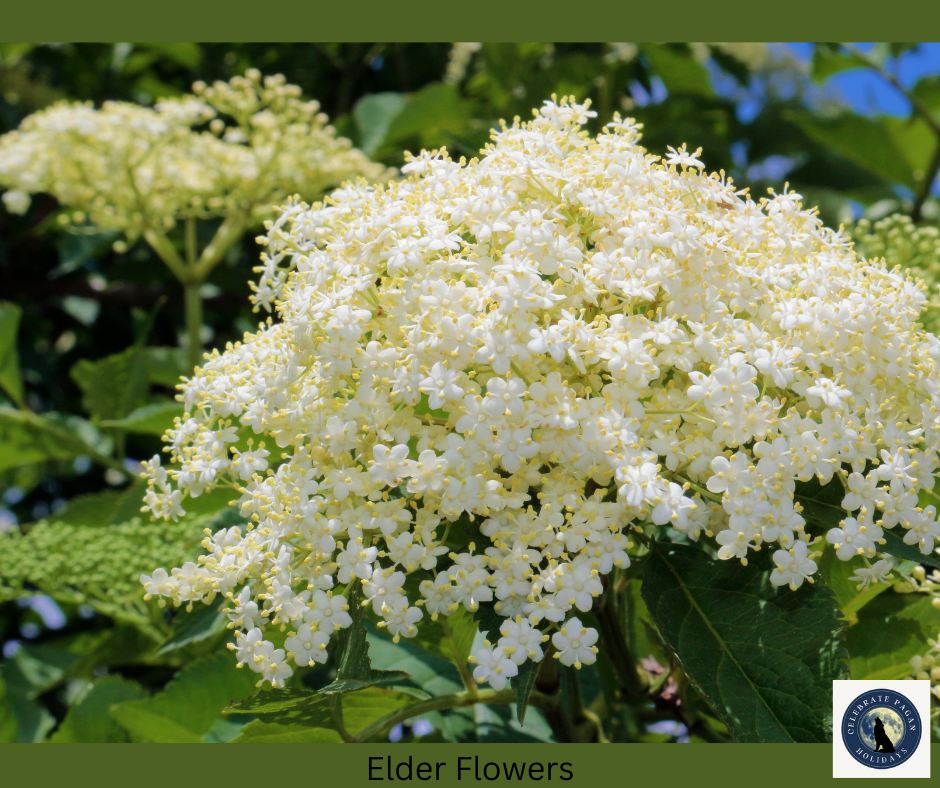
The beautiful flowers of the elderberry can be cooked and eaten as well. They make delicious fritters, tea, or wine. Just remember to limit your flower harvest so you get a bountiful berry harvest.
Correspondences of Elder
Elder carries a calm, wise, and protective energy that aligns well with late autumn and early winter. In modern pagan practice, its correspondences often include:
Ogham Letter: Ruis (R) which symbolizes completion, the end of a cycle, and the subsequent new beginning.
Symbolic Meaning: Ancestor connections, Cleansing and banishing, Protection, Rebirth, Wisdom and introspection
Energy: Feminine
Planet: Saturn
Elements: Water or Spirit (varies by tradition, but always reflective and intuitive)
Direction: West
Season: Late Autumn and Early Winter
Corresponding Star Sign: Sagittarius
Colors: Deep purple, white, midnight blue
Deities: Brigid, Ceridwen, Freya, Hel, Mars
A great way to relax and reflect! Check out my coloring books on Amazon.
Deities Connected with Elder
Several deities across Europe have ties to elder trees, protection, and winter transitions.
The Cailleach
In Celtic tradition, the Cailleach is the winter goddess who shapes mountains, controls winter storms, and oversees the land’s rest period. She is the determiner of the start of spring. Often depicted as a blue-faced, wild old woman with long silver hair, the Cailleach can be a fierce and chilling figure. Elder suits her transformative nature, especially its link to death-and-rebirth cycles.
Kerridwen/Ceridwen
Known as the Keeper of the Cauldron of rebirth, knowledge, and transformation, Kerridwen is a goddess associated with the end of autumn, honoring ancestors, and new life coming from darkness
She is associated with inspiration, transformation, and rebirth. And is most famously known for her enchanted cauldron, which symbolizes knowledge. The cauldron is a frequent motif in Celtic mythology.
Freyja
The tree is sacred in Norse mythology, the Goddess Freya is linked to nature, fertility, and the cycles of growth represented by trees. The elder is sometimes called the "Lady's tree". It’s dual nature (life and death) aligns with Freyja's association with both war and love.

Our NEW & UPDATED Norse Pagan book is out
Follow Erik as he teaches you about the Norse deities, values, and ways to practice your faith. Lots of hands on activities!
Hel
The plant also has a complicated reputation, sometimes symbolizing endings and death. The elder tree is considered a plant that exists between worlds. Its hollow stems are linked to transformation and the underworld. Black berries of the Elder tree are associated with death, aligning with the Norse god of death, Hel.
Mars
Mars was frequently associated with Celtic deities in Gaul, Spain, and Britain, and in these settings, he was often invoked as a healer. Mars was the Roman god of war. His Greek counterpart is Ares. He was depicted as a powerful military deity who protected Roman borders and efforts in battle.
Elder Magic
Magical Uses
Using elder wood for protective charms or boundary magic
Adding dried elderberries or flowers to healing spells
Including elder in ancestor altars
Making protective wreaths or bundles for the home
Burning elder incense to support divination or dream work (never the wood—its smoke can be irritating)
Cleanse and Release
Use this month to let go of what no longer serves you.
Write old habits, fears, or frustrations on paper and burn them safely in a fireproof dish.
Sweep your home symbolically, pushing out stagnant energy.
Take a bath infused with lavender or rosemary to release tension.
Practice Quiet Magic
This month favors introspective, gentle workings, and exploring your spiritual strengths. Divination is a great way to get in touch with yourself and reflect on your journey. Divination, either tarot or runes, can help to answer questions and help you make decisions.
Erik just wrote A Modern Pagan’s Guide to Norse Runes: History, Uses, and the Major Symbols that introduces you to using runes and goes over the Major Runes of the Elder Futhark and has a free download to help you use them.
American Hoodoo
In Traditional American Hoodoo, carrying the leaves, berries, or roots is believed to guard a person from harm, especially illness. In Hoodoo Root and Herb Magic, a classic work by Catherine Yronwode describes using elder to draw a circle in the dirt around yourself, step inside, and speak your wish or prayer from within that protected space.
Unlike some Old World European traditions, American Hoodoo does not hold taboos about bringing elder wood indoors. In fact, pieces of elder are often placed inside the home to protect against theft, block unwanted attention, and create both physical and spiritual shielding for the household.
A Simple Elder Month Ritual
Light a white or deep purple candle and sit in a quiet space. Hold a branch, dried berries, or even a photo of an elder tree. Reflect on the year behind you: what you learned, what challenged you, and what you’re ready to lay down. Speak aloud or write what you are releasing.
Then set one intention for the coming year—something grounded and nurturing. Close by thanking the elder spirit or the land spirits around you, and extinguish the candle with gratitude.
How to Celebrate the Elder Month
This season is ideal for gentle, meaningful practices that honor the winter landscape and your own inner world. You don’t need elaborate rituals. Elder energy supports simple, heartfelt actions. Branches were traditionally hung over doors to ward off evil spirits and bad omens. The hollowed branches were used to make flutes or whistles, believed to help communicate with the Fae.
Connect with Ancestors
Elder offers a natural doorway to ancestral connection.
Place photos, small heirlooms, or a cup of tea on an ancestor altar.
Light a candle in honor of family, spiritual guides, or beloved wildlife that has passed.
Sit quietly and journal about guidance you feel emerging.
Make Elderberry Remedies
Work with the gifts of the tree directly.
Brew elderberry syrup for winter wellness.
Make elderflower tea or salve for soothing, healing rituals.
Offer a small portion of elderberry syrup or blossoms as a blessing to the land.
From my environmental brand. Learn how to grow and use elderberry.
Watch and Honor Winter Wildlife
In both Britain and North America, elder shrubs support birds, foxes, and small mammals. It is a great small tree/shrub that you can plant in the backyard to support your local wildlife. Elderberries need cross-pollination and the cultivars Adams and Johns work well together.
Author and founder, Ame, is an environmental educator and wildlife rehabilitator. She is an eclectic pagan and green which who loves nothing better than sitting in the woods or by the lake. You can learn more about our team here.

Arawn (aka Aroun) is the ruler of Annwn, the Otherworld, and is associated with hunting, shape-shifting, and magic. Arawn is known for his fairness, wisdom, and honor, and he plays a prominent role in the Welsh tales collected in the "Mabinogion," particularly in the story of "Pwyll, Prince of Dyfed."